20 Taste Safe Sensory Play Ideas for a Sensory Tray
Sensory play gets messy fast, and that is often the point. A tray gives the mess a clear boundary, makes clean-up easier, and turns simple kitchen ingredients into rich play materials for little hands.
Taste safe sensory play is especially useful for babies, toddlers, and children who still explore with their mouths. Taste safe does not mean “serve as a snack”, it means the materials are made from food or food-safe items so accidental tasting is less worrying. Stay close, avoid choking hazards, check allergies, and choose textures that suit the child’s age and stage.
A large tray, tuff tray, shallow baking tray, or plastic storage lid can all work well. For anyone setting up a tuff tray, sensory play, Dubai based play session, these ideas are simple, flexible, and easy to adapt with ingredients you may already have at home.

Before you start making taste safe sensory trays
Keep the setup simple. A good sensory tray does not need many items. One main texture, one or two tools, and a small bowl for scooping can be enough.
A few safety points help keep play calm and enjoyable:
Supervise closely, especially with babies and toddlers.
Avoid whole grapes, nuts, popcorn, hard sweets, and other choking risks.
Use larger tools for younger children, such as chunky spoons, cups, and silicone muffin cases.
Offer water nearby for rinsing sticky hands.
Throw away anything that has been played with, mouthed, or left out too long.
Keep wet foods cool before play and limit play time in warm weather.
Now for the fun part.
Soft and squishy tray ideas
1. Yoghurt paint
Plain yoghurt makes a lovely base for taste safe painting. Add a little fruit purée or a tiny drop of food colouring to create different shades.
Spread paper inside the tray or let children paint directly onto the tray surface. Offer silicone brushes, fingers, or large vegetable sticks as stampers.
Practical tip: Use thick yoghurt for less dripping and easier mark-making.
2. Mashed banana mash-up
Mash ripe bananas and place them in the centre of the tray. Add soft tools such as a spatula, spoon, and silicone cupcake cases.
Children can squash, smear, scoop, and transfer the banana. It is sticky, scented, and easy to prepare.
Practical tip: Add a sprinkle of oats to change the texture halfway through play.
3. Avocado smush tray
Ripe avocado has a smooth, creamy texture that is perfect for squeezing and spreading. It also has a soft green colour that works well for garden or dinosaur-themed trays.
Add toy animals that are easy to wash, large leaves, and a few spoons.
Practical tip: Rub a little lemon juice into the avocado if you want to slow browning, but skip this for babies who may dislike the sharp taste.
4. Mashed potato construction site
Cooked mashed potato makes a brilliant base for pretend roads, mud patches, and building play. Tint it with a little cocoa powder for a brown “mud” effect.
Add clean toy diggers, large stones that are too big to swallow, or chunky blocks.
Practical tip: Let the mash cool fully before it goes on the tray.
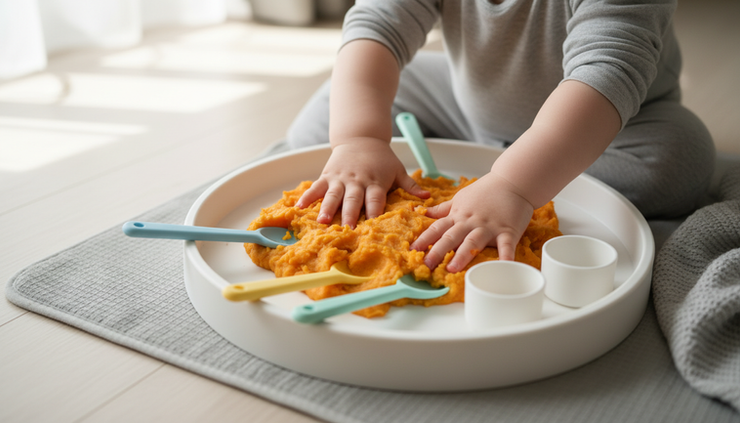
5. Sweet potato squish
Cooked sweet potato has a bright colour and soft, velvety texture. Spread it across the tray and add forks, mashers, and scoops.
This works well for autumn themes, farm trays, or simple colour exploration.
Practical tip: Leave a few soft lumps in the mash for extra sensory interest.
Slippery and wobbly tray ideas
6. Cooked spaghetti worms
Cook spaghetti until soft, cool it, and place it in the tray as a wriggly pile. Keep it plain or add food colouring for rainbow spaghetti.
Children can pull, twist, cut with child-safe scissors, and fill bowls.
Practical tip: Toss the spaghetti with a little oil to stop it clumping too much.
7. Jelly dig
Set jelly in a shallow dish, then break it into pieces inside the tray. Hide large, washable toys inside for children to rescue.
The wobble, shine, and coolness make this an exciting texture.
Practical tip: Use unflavoured gelatine with fruit juice if you prefer to control sweetness.
8. Chia seed slime
Mix chia seeds with water and leave them to soak until they form a slippery gel. The result feels like slime but uses a food ingredient.
Add scoops, cups, and small sieves for pouring and straining.
Practical tip: This can get very sticky, so use it when you have time for a proper clean-up.
9. Cornflour gloop
Mix cornflour with water to make a strange material that feels hard when pressed and runny when released. It is a classic sensory play favourite.
Pour it into a tray and let children tap, squeeze, scoop, and watch it drip.
Practical tip: Start with cornflour in the tray and add water slowly until the texture feels right.
10. Fruit purée swirls
Spoon two or three colours of fruit purée into the tray and let children swirl them together. Mango, strawberry, apple, and blueberry purées work well.
This is a gentle option for younger babies who are already trying similar foods.
Practical tip: Keep the layer thin so the tray stays more about play than eating.
Dry scooping and pouring tray ideas
11. Oats farm tray
Rolled oats make a soft, dry base for scooping and pouring. Use them as pretend animal feed, farm ground, or a simple filling station.
Add toy farm animals, cups, and spoons.
Practical tip: Choose larger rolled oats over fine oat flour for easier clean-up.
12. Cereal scoop station
Use puffed rice, cornflakes, or other age-appropriate cereals as a crunchy base. Children can scoop, crush, pour, and listen to the sounds.
This works well with measuring cups, bowls, and cardboard tubes.
Practical tip: Avoid small hard cereals for children who still put everything in their mouths.
13. Edible sand with crushed biscuits
Crush plain biscuits or crackers into a sandy texture. Add shells, large stones, buckets, and spoons for a beach tray.
The texture is grainy and easy to shape into small piles.
Practical tip: Mix crushed biscuits with a little desiccated coconut for a beach-like look, only if coconut is safe for your child.
14. Rice-free rainbow oats
If you want a dry rainbow tray but prefer not to use rice, colour oats with food colouring and let them dry fully before play.
Children can sort colours, pour layers, and make pretend cakes.
Practical tip: Dry the oats on a tray overnight so they do not clump.
15. Flour mark-making tray
A thin layer of flour creates a simple writing and mark-making surface. Children can draw lines with fingers, brushes, or toy cars.
It is quiet, low-prep, and useful for early pattern play.
Practical tip: Use only a thin dusting. A deep pile of flour becomes messy very quickly.

Theme-based taste safe tray ideas
16. Cocoa powder muddy animals
Mix cocoa powder with a little water or yoghurt to make taste safe “mud”. Add washable animal figures such as pigs, elephants, or dinosaurs.
Children can cover the animals, wash them in a bowl of water, then repeat.
Practical tip: Keep a towel nearby. This one is wonderfully messy.
17. Green pea pond
Cook frozen peas until soft, then cool them fully. Place them in the tray with a little water, large leaves, and toy frogs or ducks.
Children can scoop peas, splash gently, and explore colour.
Practical tip: Lightly mash some peas for younger children to reduce rolling and choking risk.
18. Orange and lemon water play
Add slices of orange and lemon to a shallow layer of water. Include cups, ladles, and a small sieve.
This tray smells fresh and gives children a chance to explore sinking, floating, pouring, and squeezing.
Practical tip: Avoid citrus if the child has sensitive skin or any cuts on their hands.
19. Herb garden tray
Place soft herbs such as mint, coriander, or basil in a tray with cooked couscous, oats, or mashed potato as the base.
Children can tear leaves, smell them, sprinkle them, and stir them into the base.
Practical tip: Use only edible herbs and rinse them well before play.
20. Edible playdough invitation
Make a simple taste safe dough using flour, water, oil, and a little food colouring. Some recipes use salt, but for children likely to taste a lot, choose a low-salt or salt-free version.
Add rolling pins, cutters, large buttons made from food-safe materials, or chunky pasta shapes.
Practical tip: Store homemade dough in the fridge and discard it if it smells odd or dries out.
Easy sensory tray combinations
Once you have tried a few single-texture trays, combine two or three ideas to make themed play. Keep the tray balanced so it does not become overwhelming.
Theme | Base | Add-ons |
Farm play | Oats | Toy animals, spoons, cups |
Dinosaur swamp | Chia slime | Large dinosaurs, leaves, rocks |
Beach day | Crushed biscuits | Shells, scoops, blue jelly |
Construction site | Mashed potato | Toy diggers, blocks, cocoa mud |
Fruit painting | Yoghurt | Fruit purée, brushes, paper |
A familiar base with one new texture often works best. For example, if a child already enjoys oats, add a small bowl of yoghurt paint beside it. They can choose whether to explore the new material or stay with the dry texture.
Clean-up tips that make sensory play easier
Sensory trays are meant to be hands-on, but clean-up does not need to take over the day.
Try these simple habits:
Place a washable mat or old sheet under the tray.
Dress children in clothes that can get messy.
Keep wipes, a bowl of water, and a towel nearby.
Use only a small amount of material at first.
Clean tools straight after play, especially if you used dairy, fruit, or cooked food.
Compost food waste where suitable.
If the tray is too full, children often dump everything out just to make space. A smaller amount invites more focused scooping, pouring, poking, and exploring.

A simple way to choose the right idea
When choosing a sensory tray, think about the child’s current stage.
For babies, start with soft, familiar foods such as yoghurt, banana, or fruit purée. For toddlers, add scooping tools, toy animals, and simple pretend play. For older children, try themes, colour mixing, mark-making, and small challenges such as rescuing toys from jelly.
The best sensory tray is not the prettiest one. It is the one that invites safe, curious, hands-on play. Start small, watch what holds attention, and let the child lead the next step.


Comments