25 Creative Invitation to Play Ideas for Toddlers and Preschoolers Using Everyday Materials
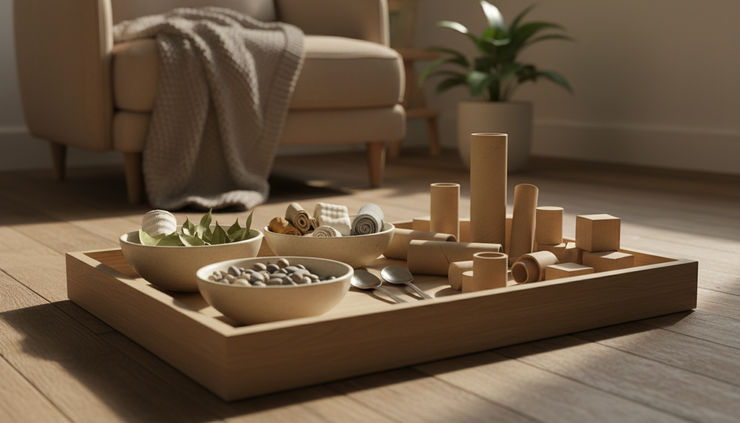
A good play setup does not need fancy toys. A tray, a few bowls, some bottle caps, leaves, pebbles, ladles, cardboard tubes, or old fabric can hold a child’s attention beautifully when arranged with care.
An invitation to play is a simple, open-ended setup that says, “Come and explore.” There is no fixed end result. Toddlers may pour, post, stack, sort, and scatter. Preschoolers may make stories, patterns, shops, roads, or tiny worlds. The best part is that most of these ideas use things already found at home, in the kitchen, or on a short walk outside.
Before setting up, check for choking risks, sharp edges, loose batteries, glass, or anything unsafe for the child’s age. Stay close, especially with toddlers, water, small parts, and sensory materials.
Start with sensory play that feels calm and inviting
1. Create a rice pouring station
Fill a shallow tray with uncooked rice and add small cups, katoris, spoons, funnels, and a ladle. Children can scoop, pour, fill, empty, and repeat. For a mess-light version, place the tray on a large bedsheet. For preschoolers, add two colours of rice and invite them to mix, separate, or make pretend “recipes”.
2. Set up a dal sorting tray
Use different dals such as masoor, moong, chana, and rajma in separate bowls. Add an empty thali or muffin tray for sorting. Toddlers may simply touch and transfer. Preschoolers can sort by size, colour, shape, or “food for different animals”. Keep whole pulses away from children who still mouth objects.
3. Offer a water transfer activity
Place two shallow bowls on a tray, one with water and one empty. Add a sponge, spoon, dropper, small cup, or clean medicine measuring cup. This supports hand strength and focus. A few drops of food colour make it extra appealing. Keep towels nearby and use very little water.
4. Make a flower petal soup
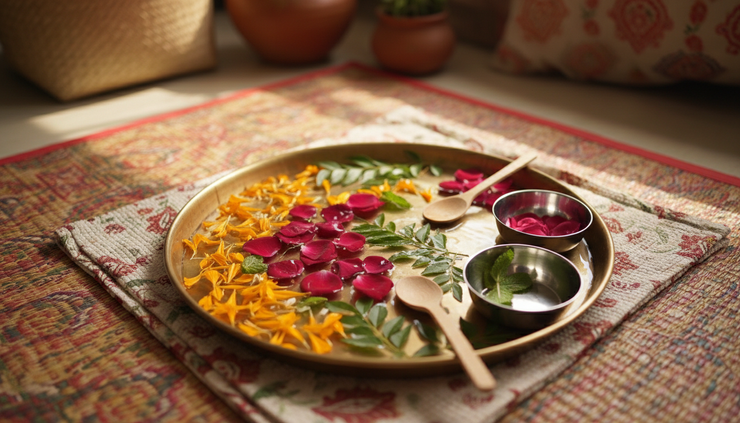
Collect safe flower petals, leaves, and herbs. Place them in water, bowls, spoons, and a small sieve.
Children can stir, mash, strain, and invent soups or perfumes. Marigold petals, curry leaves, mint, and rose petals make this especially fragrant. Check that all plants are safe and pesticide-free.
5. Build a texture basket
Fill a basket with everyday textures: a soft dupatta, scrub pad, cotton balls, wooden spoon, metal lid, jute string, sponge, and a clean paintbrush. Invite children to touch, compare, hide, and name. Add words casually: soft, rough, bumpy, smooth, heavy, light. There is no need to turn it into a lesson.
Use kitchen items for sorting, matching, and tiny challenges
6. Turn a muffin tin into a colour sorter
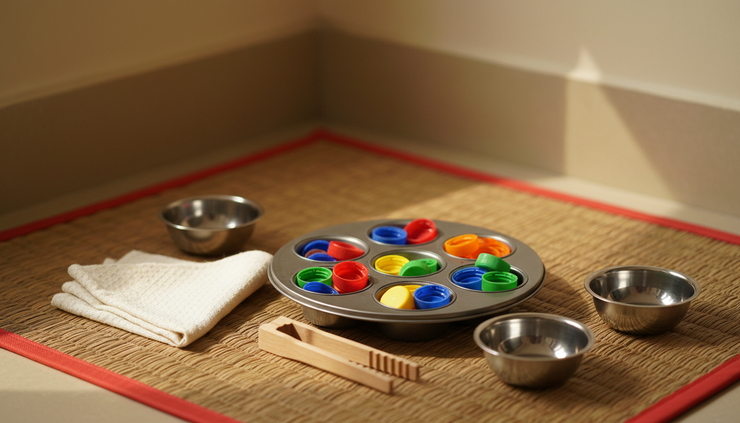
Place coloured bottle caps, pom-poms, fabric scraps, bangles, or blocks beside a muffin tin or small bowls. Add one coloured item in each section as a clue. Toddlers may match a few colours. Preschoolers can create patterns or count each cup. Use large pieces for younger children.
7. Make a spoon and bowl matching game
Gather different spoons and bowls from the kitchen. Mix sizes, shapes, and materials such as steel, wood, and silicone. Invite children to find which spoon fits which bowl, which one makes a louder sound, or which one carries the most rice. This simple setup supports observation and trial and error.
8. Offer tongs with cotton balls
Place cotton balls, large pom-poms, or rolled socks in one bowl and an empty bowl beside it. Add tongs, clothespins, or a small roti tong if safe and easy to handle. Children build fine motor control as they transfer items. If tongs are frustrating, swap them for a spoon.
9. Create a lid-matching tray
Collect clean plastic containers and their lids. Separate them on a mat and let children match each pair. This looks plain, but many young children love the satisfying click of the right fit. Add a few boxes, dabba lids, and screw-top jars for older preschoolers.
10. Make a pretend snack counter
Set out small plates, empty containers, spoons, paper cups, and pretend food made from rolled socks, leaves, or blocks. Add a notepad for “orders”. Children can run a dosa stall, a fruit chaat shop, a tea counter, or a picnic. This setup often leads to rich pretend play and new vocabulary.
Invite building, posting, and problem-solving
11. Make a cardboard tube drop
Tape cardboard tubes to a wall, cupboard side, or large carton. Place a basket of pom-poms, bottle caps, or rolled paper balls nearby. Children drop items through and watch where they go. Preschoolers can change the angle, make races, or place bowls at the bottom as targets.
12. Build with boxes and cloth
Offer shoe boxes, delivery cartons, tea boxes, scarves, dupattas, and clips. Let children build houses, buses, beds, caves, shops, or animal shelters. Large materials encourage big movement. They also allow children to lead the story rather than follow a fixed toy design.
13. Set up a block and pebble construction site
Place blocks, smooth stones, bottle caps, cardboard pieces, and toy vehicles together. Add a spoon as a “digger”. Children can build roads, bridges, towers, and tunnels. If stones feel risky for a younger toddler, use rolled socks or chunky wooden pieces instead.
14. Create a posting box
Cut a slot in a cardboard box or old container lid. Offer large buttons, old cards, fabric squares, jumbo craft sticks, or cardboard coins. Posting is deeply satisfying for toddlers. Preschoolers can sort what goes in each slot or decorate the box as a letterbox.
15. Make a balancing tray
Place cardboard tubes, lids, blocks, corks, and flat cardboard squares on a tray. Invite children to stack and balance. Keep it low and soft so falling towers are part of the fun. Try adding a small animal figure to stand on top, which gives a playful goal.
Set up art and mark-making without pressure
16. Try water painting on the floor
Give children a bowl of water and a clean paintbrush. Let them paint on a balcony floor, bathroom tile, slate, dark paper, or a large stone. The marks disappear as they dry, which makes this wonderfully low-stress. It is ideal when there is little time for cleanup.
17. Make a nature collage tray
Collect leaves, petals, twigs, seed pods, and small paper pieces. Add glue, paper, and a brush for preschoolers. For toddlers, skip glue and use contact paper if available. Children can arrange faces, forests, rangoli-inspired circles, or random designs. Process matters more than a neat final picture.
18. Offer cardboard stamp printing
Cut old cardboard into shapes or use cardboard tubes, bottle caps, sponge pieces, and vegetable ends such as bhindi or potato. Add washable paint on a plate. Children can stamp patterns on old newspaper or scrap paper. Keep the paint layer thin to reduce slipping and smudging.
19. Set out a sticker rescue
Stick bits of masking tape or washi tape to a tray, wall, or table edge. Leave a few tabs folded over for toddlers. Children peel, stick, move, and layer the tape. This tiny task builds hand strength and focus. Preschoolers can use tape to make roads, letters, or shapes.
20. Create a loose-parts rangoli
Place coloured paper circles, flower petals, buttons, bangles, leaves, and fabric scraps in small bowls. Add a round mat, tray, or drawn circle as the base. Children can arrange and rearrange without glue. This is a lovely festival-friendly play idea, but it works any day.
Bring stories, letters, and numbers into everyday play
21. Make a story basket
Choose a simple theme, such as farm, rain, market, bedtime, or bus ride. Add a few related objects: cloth, animals, spoons, pebbles, blocks, and a small box. Start with one line, then step back. A stone can become a potato, a spoon can become a person, and a scarf can become a river.
22. Create a name hunt
Write the child’s name on a card. Place matching letters, paper pieces, or bottle caps with letters on a tray. Toddlers may match the first letter. Preschoolers can build the whole name or find the same letters around the room. Keep it playful, not test-like.
23. Set up a counting snack plate
Use raisins, makhana, banana slices, puffed rice, or cut fruit pieces. Add number cards or small bowls.
Children can count, share, group, and pretend to feed dolls or animals. Use safe food sizes and follow normal food safety rules.
24. Make a road map with tape
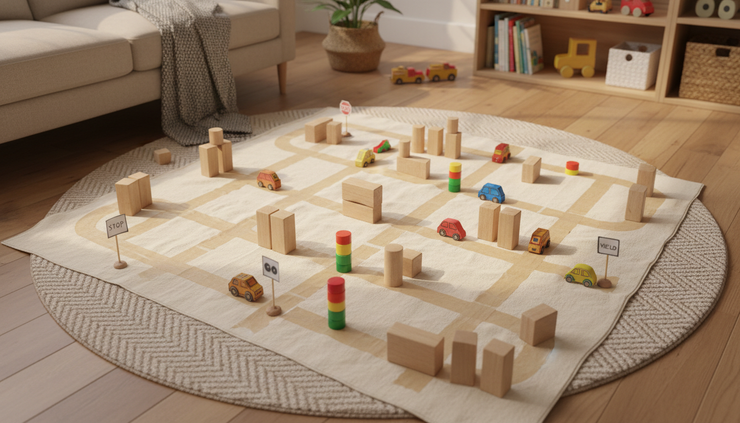
Use masking tape to make roads on the floor. Add blocks for buildings, bottle caps for traffic lights, and small toy vehicles or cardboard cars. Invite children to build a petrol pump, school, park, or vegetable market. Preschoolers may add signs and numbers to parking spots.
25. Build a mini world in a tray
Use a baking tray, thali, or shallow carton as the base. Add rice, leaves, pebbles, cardboard houses, fabric ponds, shells, toy animals, or homemade paper figures. Make a village, jungle, beach, construction site, or rainy-day scene. Mini worlds are especially good for preschoolers who enjoy storytelling and small details.
Make each invitation feel simple, safe, and special
The beauty of these setups comes from how they are presented. A few items placed with space around them often work better than a crowded tray.
Try these small habits:
Use fewer materials. Three bowls and one spoon can be enough for a toddler.
Place items at child height
A floor mat, low table, or tray makes the setup feel accessible.
Repeat favourites
Children learn through repetition. The same rice tray can become a shop, a farm, or a cooking station on different days.
Watch before adding ideas
If a child is absorbed in pouring, let the pouring continue. Adult suggestions can wait
Rotate materials slowly
Change one or two items rather than the whole setup every time.
The best invitation to play is not the prettiest one. It is the one a child can enter easily and make their own.
A gentle takeaway for everyday play
You do not need a playroom, a big budget, or a perfect plan. Everyday materials already carry enough possibility. A spoon becomes a scoop, a box becomes a house, a leaf becomes food, and a row of bottle caps becomes a pattern.
Choose one idea from this list, set it up in five minutes, and let the child decide what it becomes. That quiet space between preparation and discovery is where the magic of play begins.

Comments