50 Invitation to Play Ideas That Will Keep Toddlers and Preschoolers Engaged for Hours
A good play setup does not need expensive toys or a perfectly styled shelf. It needs one clear invitation, a few open-ended materials, and enough freedom for a child to decide what happens next.
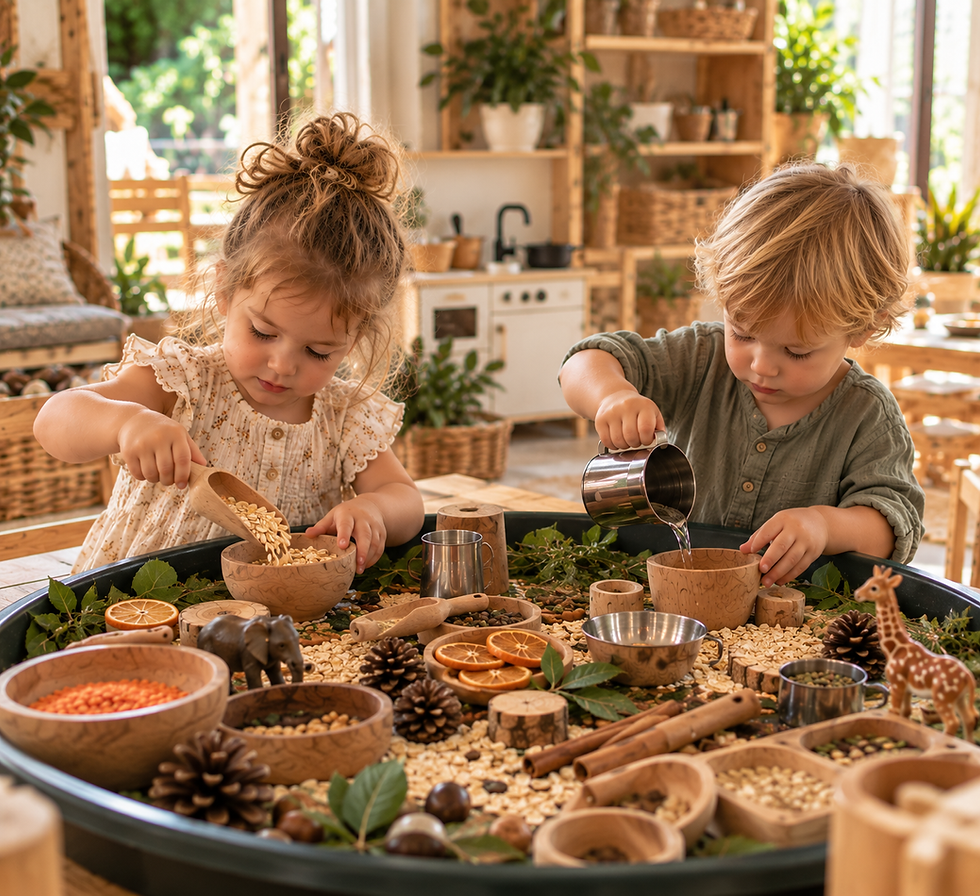
An invitation to play is a simple, prepared setup that says, “Come explore.” It might be a tray of leaves and magnifying glasses, a tub of soapy water and toy animals, or blocks arranged beside cardboard tubes. The goal is not to teach a lesson through pressure. The goal is to spark curiosity.
For toddlers and preschoolers, keep it simple. Choose safe materials, stay nearby, and avoid small items for children who still mouth objects. Rotate ideas instead of putting everything out at once. One thoughtful setup can often stretch into sorting, pretend play, pouring, building, storytelling, and clean-up play.
What makes an invitation to play work
The best invitation to play ideas have three things in common.
They are visible. Children can see what is available without digging through a toy box.
They are open-ended. There is no single correct result.
They are easy to reset. If the setup takes 40 minutes to prepare, it will not survive real life.
Use trays, baskets, thalis, muffin tins, shallow tubs, or old cardboard boxes. Add only 3 to 5 materials at a time. Then step back and watch what your child does before adding instructions.
Sensory invitation to play ideas
1. Rice scoop station
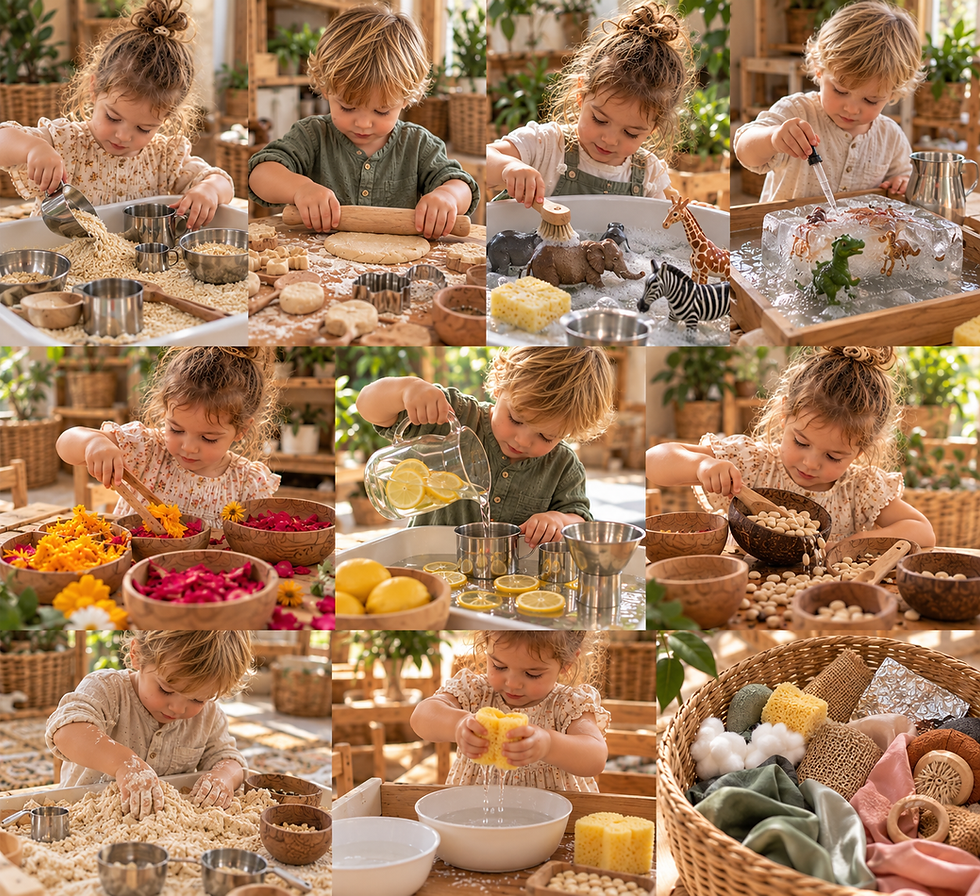
Fill a shallow tub with rice, steel bowls, spoons, and small cups.
Let children scoop, pour, and transfer. Use larger tools for toddlers and supervise closely.
2. Atta dough bakery
Make soft dough with atta and water. Add rolling pins, bottle caps, and safe cutters.
Children can make rotis, laddoos, snakes, or pretend biscuits.
3. Soapy animal wash
Place toy animals in a tub with water, mild soap, cloths, and brushes.
This often turns into sorting, bathing, rescuing, and drying.
4. Ice rescue play
Freeze small washable toys in a bowl of water. Offer warm water, droppers, and spoons.
Keep ice pieces large and supervise.
5. Flower petal sorting
Set out marigold petals, rose petals, bowls, and tongs.
Children can sort by colour, make pretend food, or create patterns.
6. Lemon water pouring
Add lemon slices to a jug of water with cups and ladles.
It smells fresh and gives useful pouring practice.
7. Coconut shell scoop play
Use a coconut shell, dried beans for older preschoolers, and bowls.
For toddlers, replace beans with large pom-poms or fabric balls.
8. Cloud dough tray
Mix flour with a little oil until crumbly. Add small bowls and spoons.
This is messy, so place a mat underneath.
9. Sponge squeeze bowl
Offer water, sponges, and two bowls. Invite children to move water by squeezing.
It builds hand strength without feeling like an exercise.
10. Texture basket
Fill a basket with safe textures like silk cloth, jute, cotton, sponge, foil, and felt.
Ask no questions at first. Let hands lead the play.
Art and mark-making invitations
11. Water painting wall
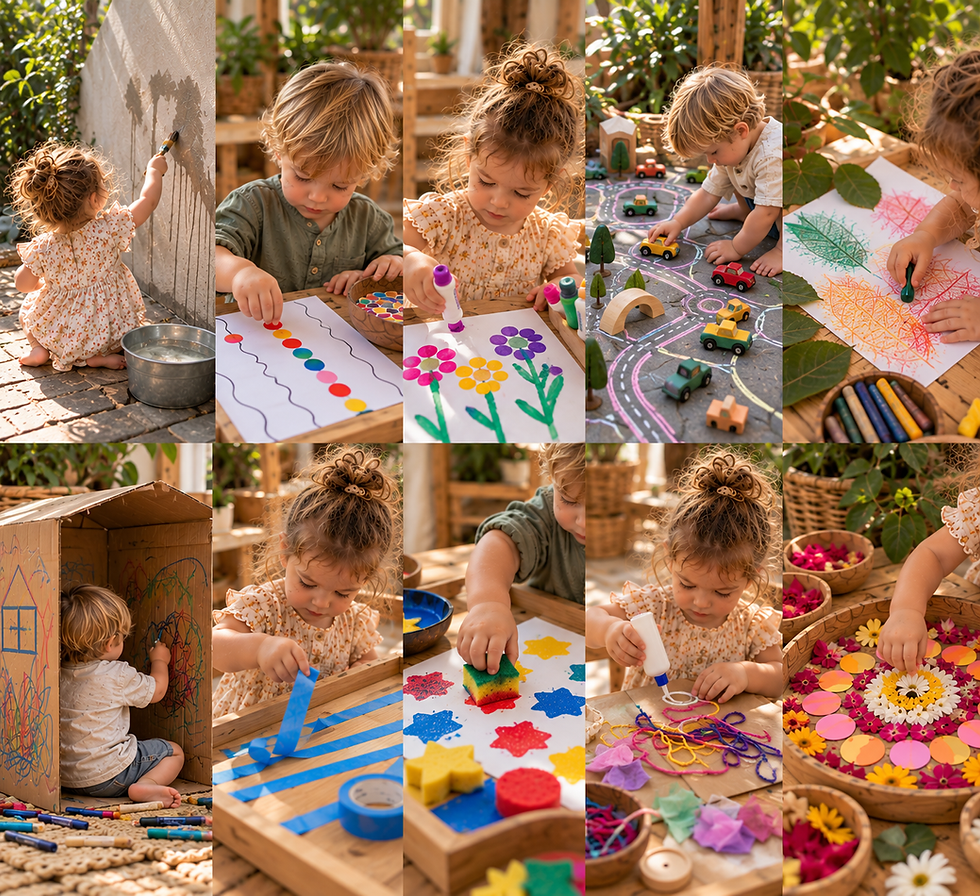
Give a bowl of water and a paintbrush near an outdoor wall or balcony floor.
The marks disappear, which makes it endlessly repeatable.
12. Sticker line challenge
Draw lines on paper and offer stickers. Children place stickers along the lines.
Use large stickers for small hands.
13. Dot marker garden
Draw stems on paper and invite children to add dot-marker flowers.
Cotton buds with washable paint work too.
14. Chalk road map
Draw roads with chalk on the floor. Add toy cars, blocks, and animals.
Children can build a town around the roads.
15. Leaf rubbing tray
Set leaves under paper and offer crayons with the wrappers removed.
Choose leaves with clear veins.
16. Cardboard box colouring
Put a large cardboard box on the floor with crayons and washable markers.
Some children colour inside it, some turn it into a house.
17. Tape peel art
Stick painter’s tape on a tray or table edge. Let children peel, restick, and arrange.
Peeling tape is surprisingly engaging for toddlers.
18. Sponge stamp shapes
Cut sponges into simple shapes and place them with washable paint.
Keep one colour at first to reduce muddy mixing.
19. Thread and glue collage
For preschoolers, offer yarn pieces, paper, and glue.
They can make roads, nests, rain, or curly hair.
20. Rangoli pattern tray
Use coloured paper circles, flower petals, and bottle caps to form rangoli-inspired designs.
Skip loose powders for young toddlers.
Building and problem-solving invitations
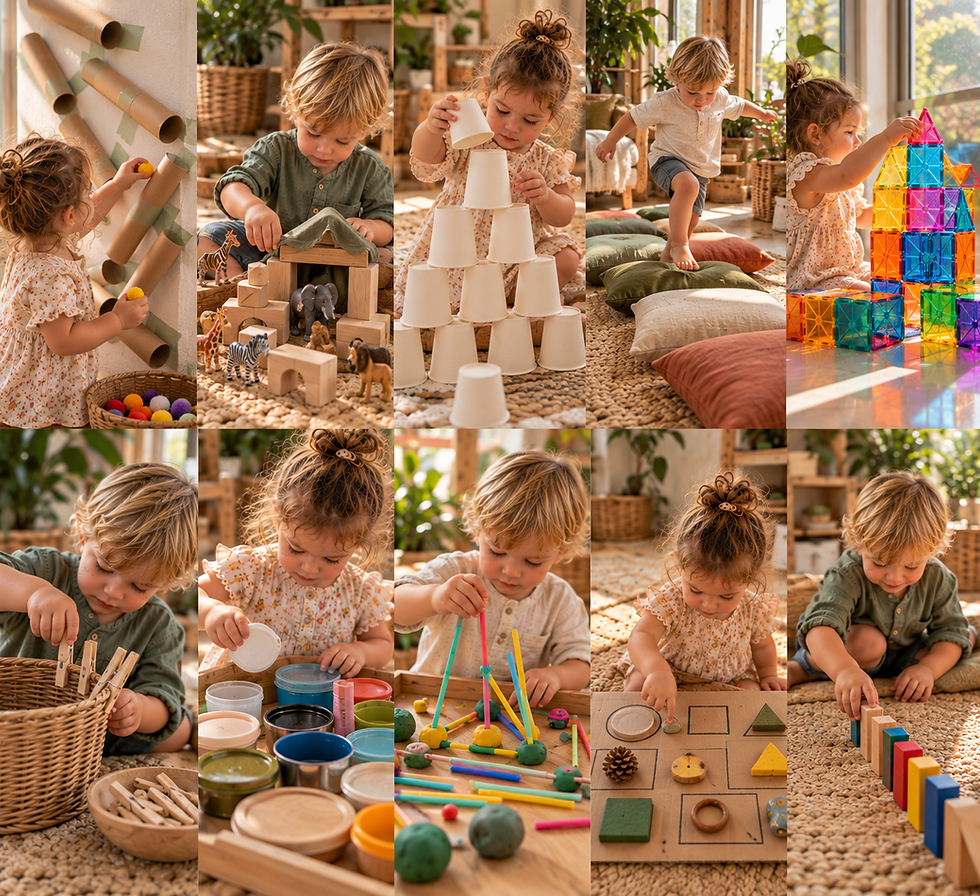
21. Cardboard tube run
Tape cardboard tubes to a wall at angles. Add pom-poms or small balls.
Children test what rolls and what gets stuck.
22. Block and animal homes
Place blocks beside toy animals. Invite children to build shelters, farms, or zoos.
Add fabric scraps for beds and blankets.
23. Cup tower challenge
Set out paper cups or steel tumblers. Let children stack, knock down, and rebuild.
This works well when energy is high.
24. Pillow bridge path
Arrange cushions like stepping stones and bridges.
Keep it low and clear of sharp furniture.
25. Magnetic tile window
If you have magnetic tiles, place them near a sunny window.
Light makes the colours more interesting.
26. Peg and basket drop
Offer clothes pegs and a basket. Children clip pegs around the edge or drop them in.
It builds fine motor control.
27. Lid matching tray
Collect clean container lids and matching boxes.
Children try to fit lids, stack them, or sort by size.
28. Straw and playdough structures
Offer playdough balls and paper straws cut short.
Preschoolers can build towers, houses, or odd sculptures.
29. Shape hunt board
Draw basic shapes on cardboard. Add loose objects that match each shape.
Children find circles, squares, and triangles around the room.
30. Domino knock-down line
Set up a few blocks in a line and leave the rest nearby.
Many children will continue the pattern and test cause and effect.
Pretend play invitations
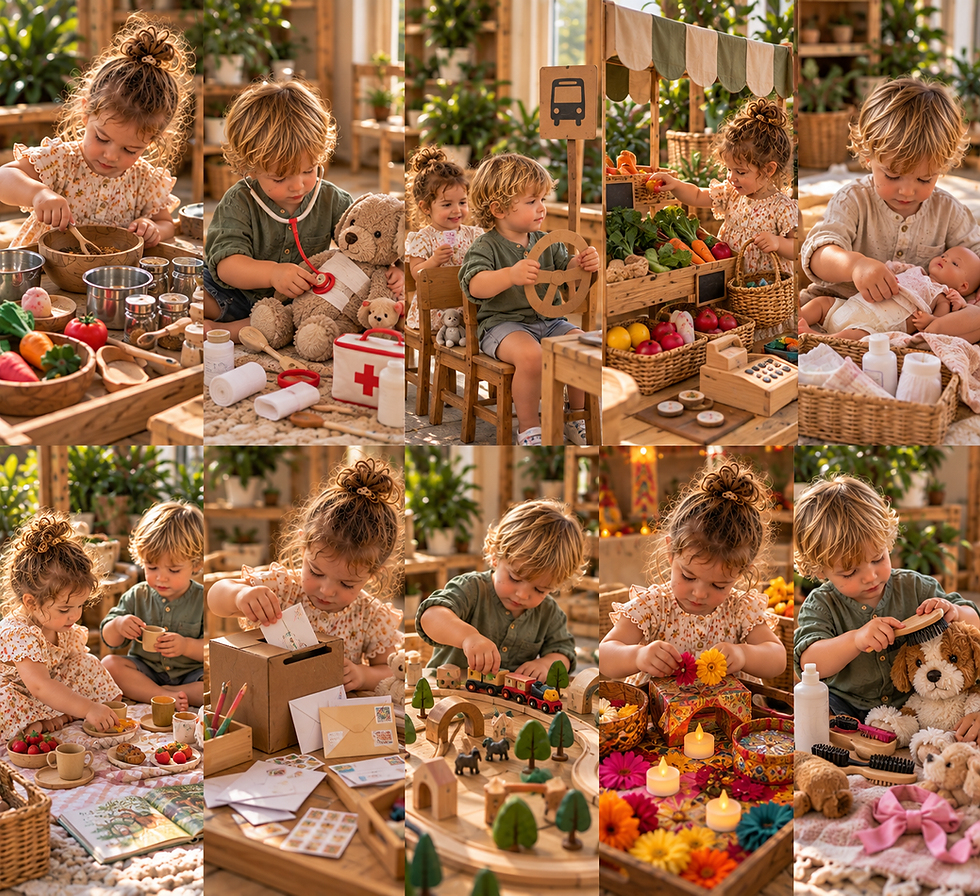
31. Mini kitchen tray
Set out bowls, spoons, fabric food, and empty spice containers.
Toddlers stir and serve. Preschoolers create full menus.
32. Doctor kit for toys
Place soft toys with bandages, cotton cloth, and a toy stethoscope.
Children practise care, language, and sequencing.
33. Bus stop setup
Use chairs in a row, paper tickets, and a bag.
Someone will become the driver within minutes.
34. Market stall play
Arrange toy vegetables, baskets, and pretend money.
Use real potatoes or onions if you want a more practical setup.
35. Baby care basket
Offer a doll, cloth nappies, small blanket, and empty lotion bottle.
This is gentle, repetitive play that toddlers often love.
36. Picnic on the floor
Lay out a small cloth with plates, cups, and pretend snacks.
Add picture books for “picnic reading.”
37. Post office basket
Provide envelopes, paper, stickers, and a box with a slot.
Children make letters, post them, and deliver them around the house.
38. Train track town
Set tracks or blocks with trees, animals, and small people.
No train set? Use chalk tracks or tape lines.
39. Festival preparation tray
Offer fabric, paper flowers, battery tea lights, and small boxes.
Children decorate, arrange, and act out family rituals safely.
40. Pet grooming station
Place toy animals with brushes, ribbons, and cloths.
It is a calmer version of animal wash play.
Nature and outdoor invitations
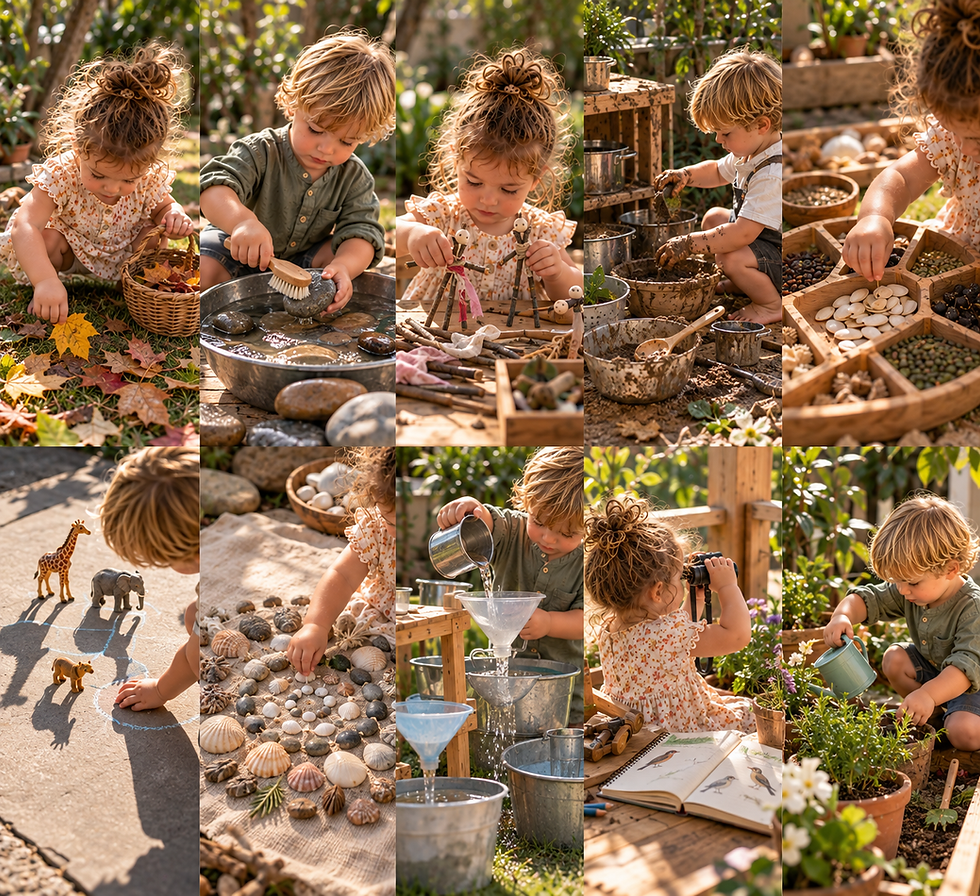
41. Leaf colour hunt
Give a basket and invite children to collect leaves in different shades.
Back indoors, arrange them from light to dark.
42. Stone washing bowl
Offer smooth stones, water, and a brush.
Children scrub, rinse, and line them up.
43. Stick family setup
Collect sticks of different sizes and add fabric scraps.
Children turn them into people, trees, bridges, or tools.
44. Mud kitchen corner
Use old vessels, spoons, leaves, and mud.
Keep separate clothes for this one. It is worth it.
45. Seed sorting plate
For preschoolers, place large seeds on a plate with bowls.
Use only age-safe sizes and watch closely.
46. Shadow tracing
Place toys in sunlight and trace their shadows with chalk.
Try again later and notice how the shadow moves.
47. Shell and stone patterns
Offer shells, stones, and a cloth mat.
Children make circles, lines, faces, and tiny homes.
48. Water transfer outdoors
Set two buckets outside with cups, ladles, and funnels.
This can keep children busy for a long stretch on warm days.
49. Bird watching basket
Place binoculars, a notebook, crayons, and a window spot.
Children can draw birds, trees, clouds, or anything they notice.
50. Mini garden care
Give a small watering can, cloth, and child-safe plants.
Children water, wipe leaves, and check for new growth.
How to make these ideas last longer

The setup matters, but the adult response matters too. Try not to explain the “right” way to play. A child who uses a spoon as a drumstick or turns a sorting tray into soup is still learning.
To stretch the play, add one small change at a time.
Add water to a dry setup.
Add bowls to a sorting activity.
Add toy animals to blocks.
Add paper and crayons to pretend play.
Add a cloth for wrapping, hiding, or making beds.
Keep a few materials in rotation rather than offering everything every day. A basket that disappears for a week often feels new when it returns.
Also, let clean-up become part of the play. Toddlers can drop blocks into a basket. Preschoolers can sort lids, wipe trays, or carry spoons back to the kitchen. The aim is not perfect cleaning. It is participation.
A simple weekly rotation
If 50 ideas feel like too many choices, start with five.
Day | Easy setup |
Monday | Rice scoop station |
Tuesday | Water painting wall |
Wednesday | Block and animal homes |
Thursday | Market stall play |
Friday | Leaf colour hunt |
Repeat the same ideas a few times before changing them. Young children enjoy repetition because it helps them feel confident. The same tray can lead to new play when the child brings fresh ideas to it.
Keep it safe and simple
Toddlers and preschoolers still need supervision, especially with water, small parts, dough, seeds, stones, and anything that could go in the mouth. Choose materials based on the child in front of you, not only their age.
The best invitation to play ideas are not the prettiest ones. They are the ones children can touch, move, test, repeat, and remake. Start with one tray, one basket, or one tub today. If it holds attention for even 15 minutes, it has done its job. If it grows into an hour of play, let the mess wait a little longer.

Comments