50 Sensory Play Ideas You Can Set Up at Home Using Everyday Materials
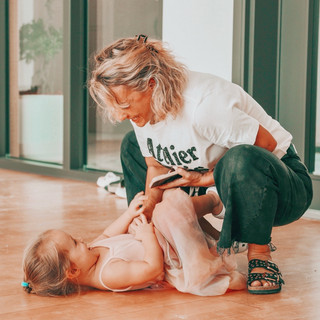
Sensory play does not need a shopping list, a craft cupboard, or a perfectly clean living room. A bowl of water, a steel spoon, atta, rice, old dupattas, empty cartons, and a few kitchen containers can keep little hands busy while building observation, coordination, language, and calm focus.
The best setups are simple. They invite a child to touch, pour, scoop, smell, listen, sort, squeeze, and notice what happens. Use these ideas on the balcony, in the bathroom, on a washable mat, or at the dining table with an old bedsheet underneath.
A quick safety note before starting: supervise closely, especially with children who still put things in their mouth. Skip small loose items for toddlers, avoid slippery floors, and choose taste-safe materials when needed.

A quick setup guide for calmer play
Before the list, keep these basics ready:
What helps | Easy option |
Surface protection | Old bedsheet, newspaper, tray, thali, or plastic table cover |
Scooping tools | Steel katori, spoon, measuring cup, ladle, tea strainer |
Clean-up plan | Small towel, dustpan, bucket, or bathroom floor setup |
Safety check | No sharp edges, no tiny items for younger children, no allergens |
Keep play short at first. Ten to fifteen minutes is enough for many children. If a child dislikes a texture, offer a spoon, brush, or cloth instead of asking them to touch it directly.
Dry sensory play ideas using pantry staples

These are low-prep and often less messy than water activities. Store dry materials in separate jars and reuse them.
Rice scooping tray -Pour rice into a thali. Add cups and spoons for scooping, filling, and emptying.
Dal sorting bowls -Mix two large dals, such as chana dal and rajma. Ask older children to sort by colour, size, or shape.
Atta finger drawing- Spread atta on a tray. Let children draw lines, circles, letters, or roads with one finger.
Suji texture rub - Place suji in a shallow plate and compare it with atta. Talk about soft, grainy, smooth, and rough.
Puffed rice crunch play -Let children crush murmura gently in a bowl and listen to the sound. This works well for sound and touch.
Tea strainer treasure hunt -Hide large safe objects in rice, such as big blocks or toy animals. Use a tea strainer to find them.
Spice smell jars -Use closed jars with tiny holes or supervised open bowls of jeera, elaichi, cloves, or cinnamon. Smell and name each one.
Salt tray letters- Spread salt in a dark tray. Draw shapes, letters, or numbers with a finger or the back of a spoon.
Dry pasta threading -Use large pasta tubes and a shoelace. This builds fine motor control for older preschoolers.
10. Kitchen sound match- Fill small sealed containers with rice, dal, coins, or pasta. Shake and match the sounds.
Water play ideas for hot afternoons
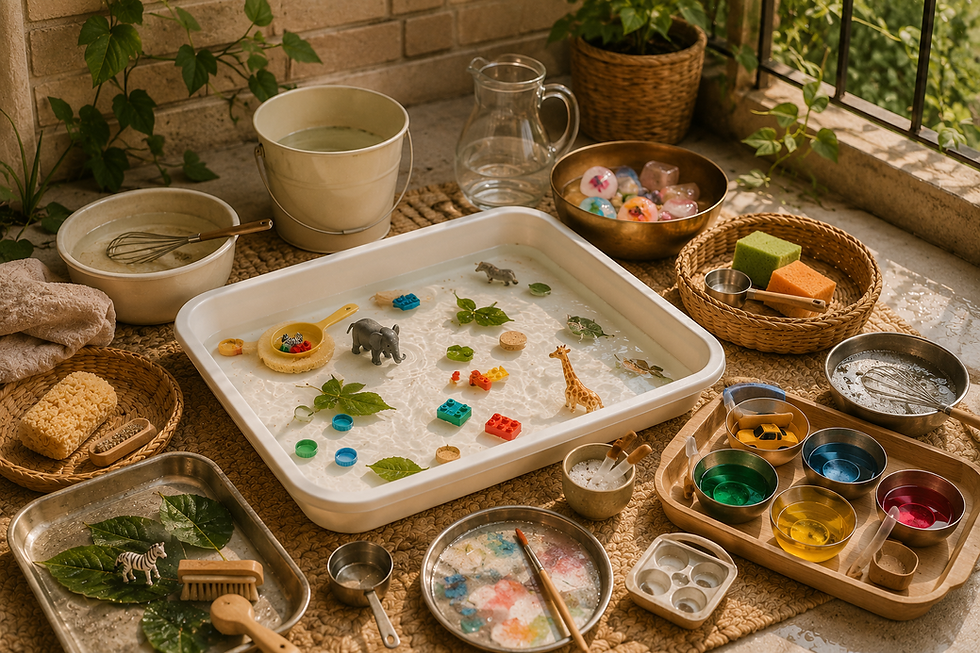
Water play is perfect for Indian summers, and it can happen in a bucket, tub, bathroom floor, or balcony corner. Keep towels nearby and empty the water when play ends.
11. Pouring station- Set out a bucket, mug, small jug, and katori. Let children pour from one to another.
12. Sponge squeeze bowl- Add clean sponges or soft cloth pieces to water. Squeeze, soak, and compare heavy and light.
13. Floating and sinking test- Offer safe objects like a spoon, leaf, bottle cap, stone, and plastic lid. Guess what floats.
14. Ice cube rescue- Freeze small washable toys in ice cubes. Use warm water in a spoon or dropper to release them.
15. Coloured water mixing- Add a drop of food colour or haldi water to separate cups. Mix and watch colours change.
16. Bubble whisking - Add a little baby-safe soap to a bowl of water. Use a whisk to make bubbles.
17. Toy wash station - Give toy cars, animals, or blocks a bath with a toothbrush, cloth, and bowl of water.
18. Leaf washing - Collect large leaves, wash them, and feel the veins, edges, and smooth surfaces.
19. Dropper play - Use a clean medicine dropper or spoon to move water from one bowl to another.
20. Water painting -Give a bowl of water and a paintbrush. Paint the floor, wall tiles, or balcony surface and watch it dry.
Taste-safe messy play ideas
These are useful for younger children, but still supervise closely. Taste-safe does not mean meal-safe after play, especially if hands and toys have been in it.
21. Curd paint - Mix curd with a tiny bit of beetroot, haldi, or spinach water. Paint on a plate or tray.
22. Mashed banana squish- Put banana on a plate and let children mash it with fingers, spoon, or fork.
23. Cooked rice mush- Use plain cooked rice with a little water. Squish, pat, scoop, and roll it.
24. Ragi dough play- Mix ragi flour and water into a soft dough. Let children press and poke it.
25. Atta dough shapes-Make a simple dough with atta and water. Roll balls, snakes, rotis, and pretend laddoos.
26. Jelly wobble tray- Use homemade jelly for older children who can play safely. Poke, cut with a spoon, and scoop.
27. Boiled potato mash - Mash cooled potato with hands or a spoon. Add peas for older children to press and find.
28. Oats sensory bowl - Soak oats in water for a soft, sticky texture. Add cups for scooping.
29. Coconut texture tray- Offer grated coconut in a bowl. It is soft, fragrant, and interesting to sprinkle.
30. Papad crunch basket - Give roasted papad pieces for supervised crunching, breaking, and sound play.
Nature-based sensory play ideas
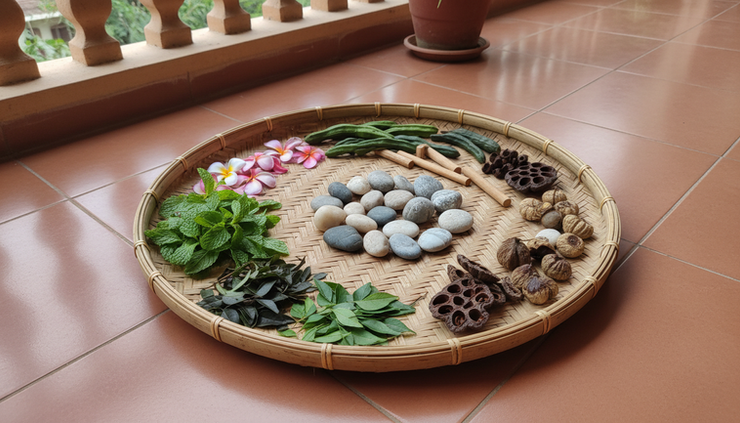
Nature gives rich textures without much preparation. Choose clean, safe items and avoid unknown berries, sharp shells, or plants that may irritate skin.
31. Leaf rubbing- Place a leaf under paper and rub with a crayon. Feel the leaf before and after.
32. Flower petal sorting - Use fallen petals. Sort by colour, size, softness, or smell.
33. Pebble washing - Wash smooth pebbles in a bowl. Compare heavy, light, cold, and warm.
34. Mud kitchen- Mix soil and water outdoors. Use old cups and spoons for pretend cooking.
35. Seed pod shaker -Place large dry seed pods in a basket. Shake, tap, and listen.
36. Shell and stone tray-Offer large shells and smooth stones. Trace the shapes and compare textures.
37. Herb smelling basket- Use coriander, mint, curry leaves, or tulsi. Crush gently and smell the difference.
38. Stick size line-up- Collect sticks and arrange from shortest to longest. Talk about rough, smooth, thick, and thin.
39. Rain sound bowl -After rain, place a steel bowl outside or near a window and listen to drops.
40. Sand scoop corner -If you have clean play sand, set it in a tray with cups, spoons, and toy animals.
Movement and sound sensory play ideas
Sensory play is not only about touch. Children also learn through balance, pressure, rhythm, and sound. These ideas work well when energy is high.
41. Pillow path - Place pillows on the floor and walk, crawl, or balance across them.
42. Dupatta tunnel - Drape a dupatta between two chairs and let children crawl under it.
43. Laundry basket push-Fill a laundry basket with soft clothes. Push it across the floor for heavy work.
44. Animal walks - Try frog jumps, bear crawls, crab walks, and slow elephant steps.
45. Steel plate drum -Use a steel plate and spoon. Tap softly, loudly, fast, and slow.
46. Clap pattern copy -Clap a simple rhythm and let the child copy it. Swap turns.
47. Sock ball toss -Roll socks into balls and toss them into a bucket or basket.
48. Blanket burrito- Roll the child gently in a bedsheet or light blanket, keeping the face clear. Add firm, safe pressure.
49. Scarf dance - Wave scarves or dupattas to music. Move high, low, fast, and slow.
50. Texture walk - Lay out a towel, mat, bedsheet, bubble wrap, and cardboard. Walk across barefoot if comfortable.
How to choose the right sensory activity
Pick the activity based on mood, age, and clean-up time. A tired child may enjoy water painting or dough. An energetic child may need animal walks or a pillow path. A curious child may spend ages sorting dal or testing what floats.
Use simple language while playing:
“This feels rough.”
“The rice is falling slowly.”
“The sponge is full.”
“The spoon makes a loud sound.”
“The leaf smells fresh.”
These words help children connect what they feel with what they can say. That is one of the quiet benefits of sensory play ideas at home. They build vocabulary through real experience, not worksheets.

Clean-up tips that make sensory play easier
A little planning keeps the mess manageable.
Use a tray or thali for small dry play.
Move wet play to the bathroom floor when possible.
Keep a cloth and dustpan nearby before starting.
Offer smaller quantities than you think you need.
Reuse dry rice, dal, pasta, and pebbles in labelled jars.
Set a clear end signal, such as “two more pours” or “last song”.
If a child dumps everything at once, pause and reset with fewer items. Sensory play should feel open, but not chaotic. The easiest activities are often the ones children return to again and again. Start with one bowl, one spoon, and one texture. Watch what catches their attention, then build from there. Everyday materials can do a lot when children get time, space, and permission to explore safely.

Comments