How Invitations to Play Support Early Childhood Development and School Readiness
A child who lines up pebbles by size is doing more than keeping busy. They are noticing patterns, making decisions, building concentration, using language, and practising the kind of thinking they will later use in maths, reading, science, and social life.
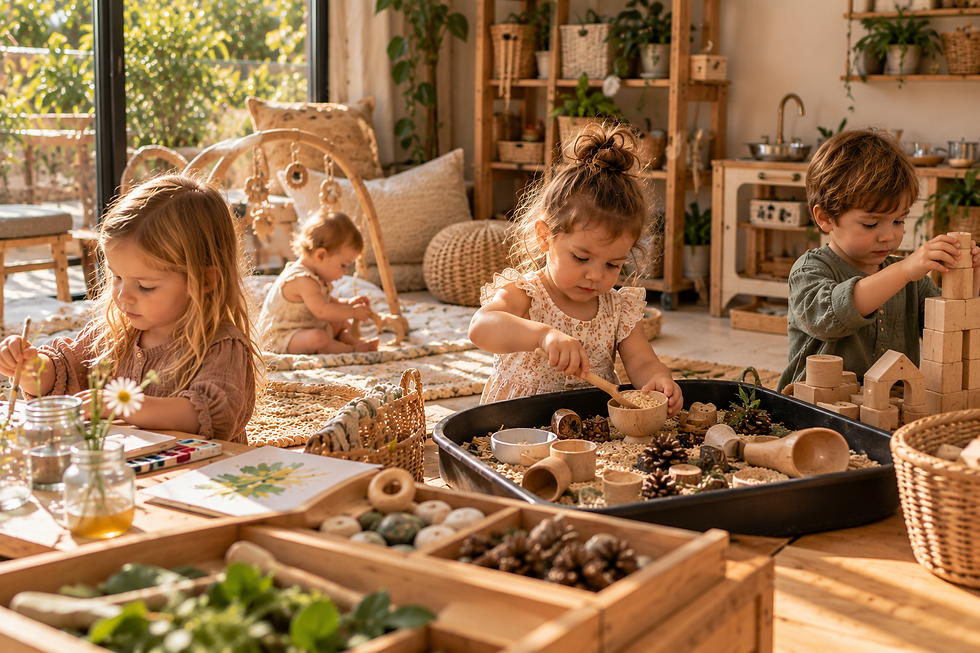
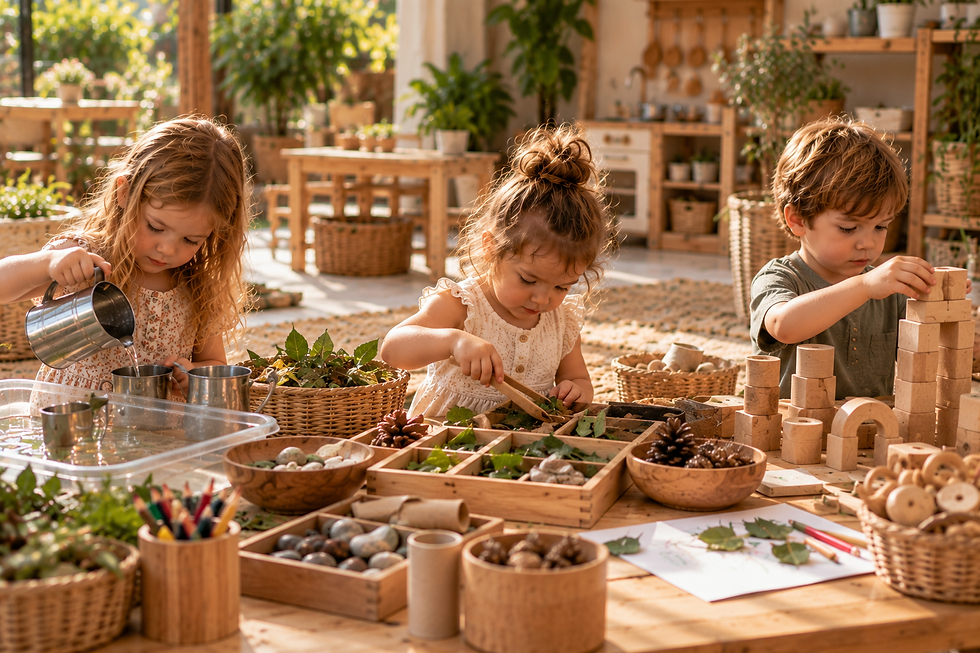
This is why invitations to play matter. An invitation to play is a simple, thoughtfully arranged play setup that invites a child to explore without needing step-by-step instructions. It might be a tray of leaves, sticks, and clay. It might be colourful buttons with bowls and tongs. It might be fabric scraps, blocks, and animal figures placed on a mat.
The adult sets the scene. The child leads the play.
That balance is powerful. It gives young children freedom, but not chaos. It offers materials, but not pressure. It encourages curiosity, problem-solving, communication, and confidence, all of which support early childhood development and school readiness.
What an invitation to play really means
An invitation to play is not a craft with a fixed result. It is not a worksheet. It is not an activity where the adult already knows what the child should make.
Instead, it is an open-ended setup that says, “Come and see what you can do.”
A good invitation usually has three features:
Open-ended materials
Children can use the items in many ways. Blocks can become towers, roads, homes, shops, or pretend food.
A clear and attractive arrangement
The setup looks inviting and easy to enter. Children can see what is available and choose where to begin.
Space for child-led choices
The child decides how to use the materials, how long to stay, and what the play becomes.
For example, placing a basket of bottle caps on the floor is simply a basket of bottle caps. Placing the caps beside sorting trays, cardboard tubes, and a small scoop turns them into an invitation. A child may sort by colour, create patterns, pour and transfer, build towers, or invent a shop.
The adult does not need to direct each move. Watching, listening, and asking the occasional thoughtful question is often enough.
Questions such as these keep the thinking open:
“What are you noticing?”
“How did you decide where that piece goes?”
“What do you think might happen if you try this one?”
“Can you tell me about what you made?”
These questions support language and reflection without taking over the play.
Invitations to play support thinking and problem-solving
Young children learn best through active exploration. They need to touch, move, compare, test, repeat, and change their ideas. Invitations to play make room for this kind of thinking.
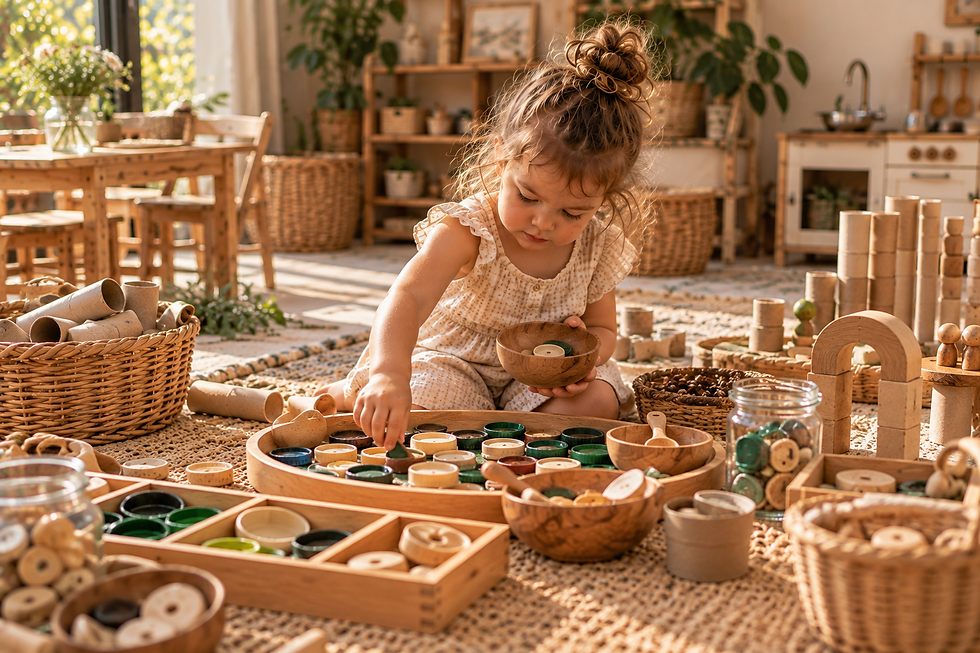
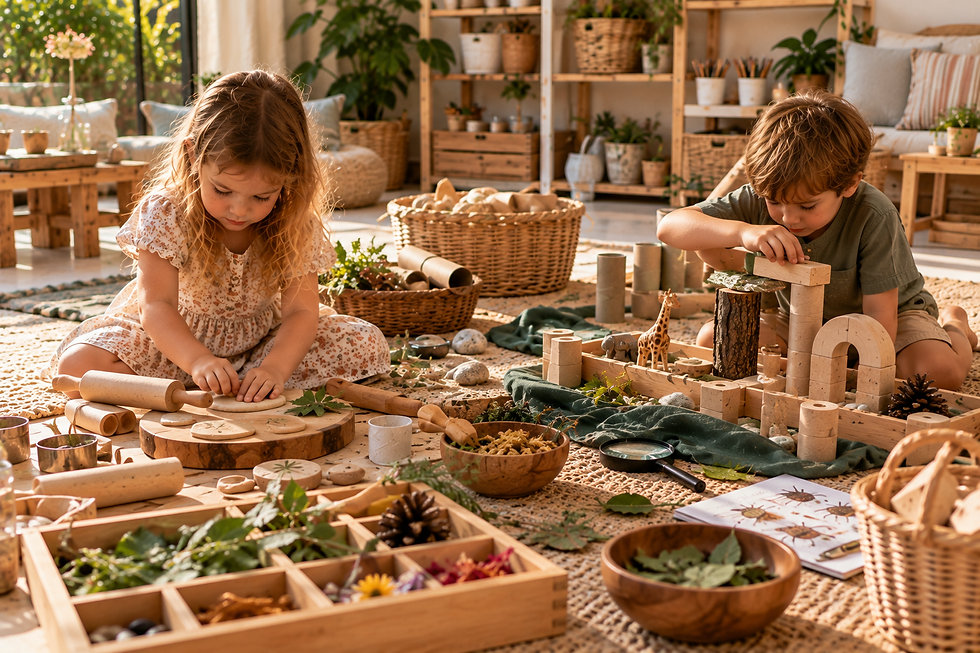
When children work with loose parts such as stones, sticks, shells, blocks, lids, fabric, or cardboard pieces, they naturally practise early cognitive skills. They compare size and shape. They count without being asked to count. They test balance. They notice which objects roll and which stay still. They group items by colour, texture, weight, or purpose. They try one idea, see what happens, and adjust.
A child building a bridge with blocks may face several problems:
The middle keeps falling.
The cars do not fit underneath.
The blocks are too slippery.
The bridge needs to be higher, wider, or stronger.
This is early engineering in action. It is also persistence. The child learns that mistakes are part of the process. They learn to pause, rethink, and try again.
That matters for school readiness because classrooms ask children to handle challenge. A child who has practised solving real play problems often enters school with stronger confidence. They are more willing to attempt a puzzle, join a group task, or try a new writing pattern.
School readiness is not only about recognising letters and numbers. It is also about attention, confidence, communication, self-control, and curiosity.
Invitations to play build these skills in a natural way.
Play setups strengthen language and early literacy
Language grows when children have something meaningful to talk about. A rich play setup gives them ideas, actions, objects, and stories to describe.
A basket of animal figures, leaves, pebbles, and fabric can become a forest. A few cardboard boxes can become a bus stand, a clinic, or a grocery shop. As children play, they use words for places, actions, feelings, sizes, positions, and plans.
They may say:
“The tiger is hiding behind the tree.”
“This one is heavier.”
“I need one more ticket.”
“The baby is sleeping, so talk softly.”
“Let us make a road to the river.”
These are not random sentences. They show vocabulary, sequencing, imagination, and social thinking.
Invitations to play also prepare children for reading and writing. Before children write letters, they need strong hands, flexible fingers, and control over movement. Scooping rice, pinching pom-poms with tongs, rolling dough, threading beads, tearing paper, and drawing in sand all support fine motor development.
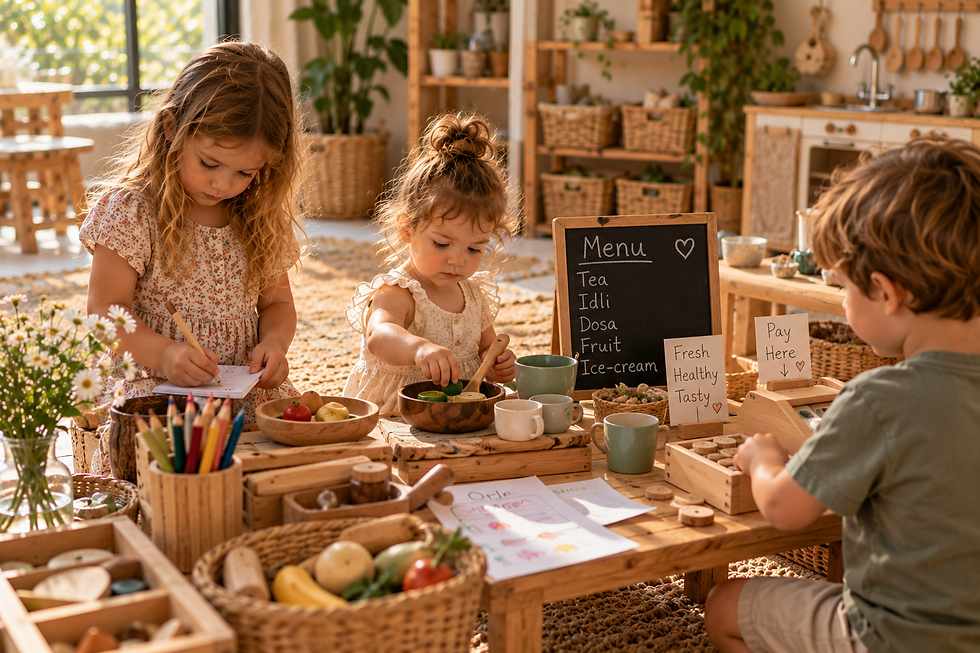
Early literacy can also appear through pretend play. A child may make a menu, draw a map, write pretend prescriptions, create name labels, or mark prices in a shop. These marks may not look like conventional writing yet, but they show an important understanding. Print carries meaning.
Adults can gently extend this without turning play into a lesson.
For a pretend restaurant, add:
Small paper slips
Crayons or pencils
Bottle caps for coins
A few plates and cups
A cloth for the tab
Then let the child decide what happens. If they ask for help writing “idli” or “tea”, help. If they use scribbles as orders, accept them as real writing in the play.
This respect encourages children to see themselves as communicators.
Social and emotional skills grow through playful choice
School asks children to do many social things. They need to wait, listen, share space, handle disappointment, ask for help, and work alongside others. Invitations to play can support these skills long before formal schooling begins.
Open-ended play gives children safe chances to practise decision-making. They choose materials, test ideas, and decide when to change direction. This supports independence.
When children play together, they also practise negotiation. One child may want the blocks for a tower while another wants them for a zoo wall. They learn to use words, make trades, set roles, and solve small conflicts.
Pretend play is especially useful for emotional development. Children act out real experiences and big feelings in a safer form. A doctor play setup may help a child process a clinic visit. A home corner may help them explore care, routines, and family roles. A puppet setup may give them language for fear, anger, kindness, or friendship.
Adults can support this by naming feelings without controlling the story.
Try saying:
“That puppet looks upset.”
“The bear is waiting for a turn.”
“You worked hard to fix that.”
“You found another way when it did not stand.”
These comments build emotional vocabulary. They also help children notice effort, patience, and empathy.
A child who can say, “I feel angry because I wanted that,” is better prepared for group learning than a child who has not had practice naming feelings. Play gives repeated, low-pressure practice.
Invitations to play build the skills behind school readiness
Many families think school readiness means knowing the alphabet, counting to 100, or writing one’s name. These can help, but they are only part of the picture.
A child also needs readiness in the body, mind, and emotions.
Invitations to play support all these areas because they combine movement, thinking, language, and choice. A single setup can help children practise many skills at once.
Play experience | Skills children practise | How it supports school |
Pouring water between cups | Hand control, focus, cause and effect | Helps with writing control and attention |
Sorting leaves and stones | Classification, observation, vocabulary | Supports maths and science thinking |
Building with blocks | Planning, balance, persistence | Builds problem-solving and spatial awareness |
Pretend shop play | Counting, conversation, turn-taking | Supports early maths and social confidence |
Drawing maps or signs | Mark-making, symbols, storytelling | Builds early writing and reading concepts |
The value lies in the connection between skills. A child pouring water is not only improving hand control. They are watching volume change, predicting spills, adjusting speed, and concentrating. A child making a pretend bus ticket is not only scribbling. They are using symbols, role play, memory, and social language.
This is why invitations to play feel simple but work deeply.
They also help children build executive function, the mental skills used to plan, remember steps, control impulses, and shift attention. These skills matter in school every day. Children use them when they follow routines, pack their bags, listen to a story, finish a task, or move from playtime to lunch.
A play setup with a few clear choices can help children practise these skills without pressure.
For example, a threading activity with beads, leaves, and cut straws encourages a child to:
Choose a pattern
Hold the string steady
Remember the next item
Keep trying when the bead slips
Decide when the necklace or garland is complete
That is a lot of learning from a simple basket.
How to create meaningful invitations to play at home or in the classroom
An invitation to play does not need expensive toys or elaborate planning. It works best when it feels manageable for the adult and interesting for the child.
Start with what is already available.
Useful materials include:
Cardboard boxes and tubes
Bottle caps and lids
Cloth pieces and scarves
Leaves, flowers, twigs, shells, and stones
Bowls, spoons, cups, and trays
Blocks, pegs, buttons, and beads
Paper, crayons, chalk, and tape
Toy animals, vehicles, or people figures
For young children, safety comes first. Avoid small items for children who still mouth objects. Check natural materials for sharp edges, insects, or dirt. Supervise water play, beads, strings, and tools.
Keep the setup simple
Too many materials can overwhelm a child. A small, clear setup often works better than a crowded one.
Try this pattern:
A base
Use a tray, mat, basket, or low table.
A few materials
Choose three to five types of items.
One gentle possibility
Arrange the materials to suggest an idea, but leave room for change.
For example, place play dough with leaves and small rolling pins. A child might make leaf prints, pretend rotis, cakes, snakes, or a garden. All of those choices are valid.
Follow the child’s interest
The best invitations often grow from what a child already noticesIf a child loves vehicles, offer roads made from tape, blocks for bridges, and bottle caps as traffic lights. If they are interested in insects, set out magnifying glasses, leaves, clay, and picture cards. If they enjoy helping in the kitchen, create pretend cooking with bowls, spoons, dry pulses, and dough. Following interest increases attention. It also shows the child that their ideas matter.
Rotate, do not replace everything
Children often return to the same materials many times. Repetition is not boredom. It is how they master skills.
Instead of changing the full setup daily, rotate one or two elements.
A block area can feel new with:
Fabric for rivers and roads
Small animal figures
Cardboard signs
Measuring tape
Stones and sticks
This keeps play fresh while giving children enough familiarity to go deeper.
Observe before you step in
Adults often want to help quickly. Yet a few seconds of waiting can reveal what the child is trying to do.
Watch for these clues:
What does the child repeat?
What problem are they trying to solve?
Which material do they return to?
Are they seeking help, attention, or more time?
What words or gestures do they use?
Then respond in a way that supports the play.
If the tower falls, avoid fixing it immediately. You might say, “It keeps tipping on this side. What could make the bottom stronger?” This keeps ownership with the child.
The adult’s role is gentle but important
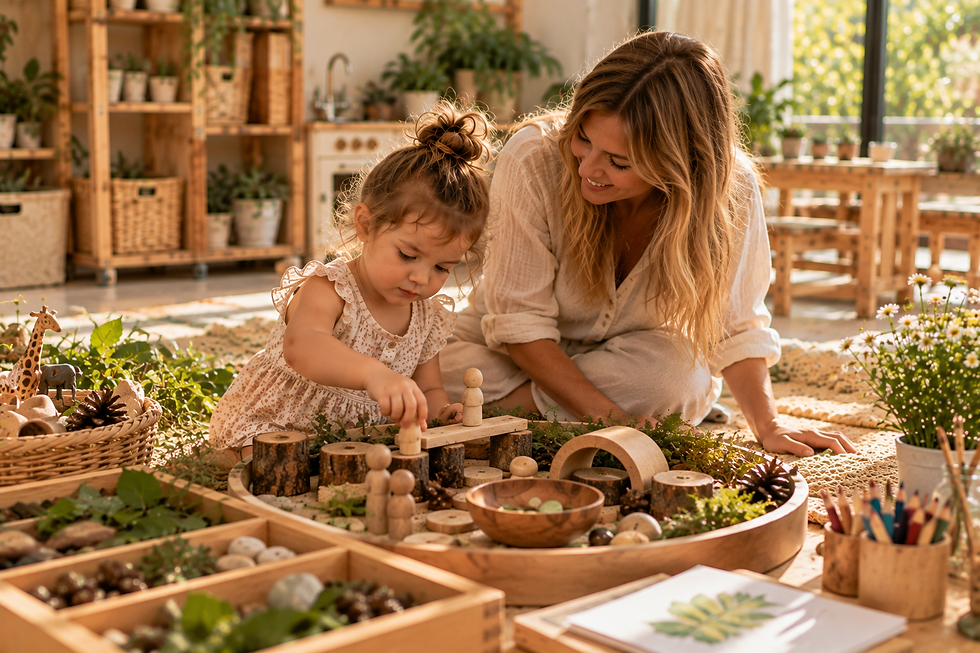
Child-led play does not mean adults do nothing. The adult prepares the environment, protects safety, notices learning, and adds language when helpful. Think of the adult role as a guide on the side.
Strong support can look like:
Sitting nearby without interrupting
Naming what the child is doing
Offering new words
Asking open questions
Helping children solve conflict
Adding one useful material when play needs it
Knowing when to step back
The key is to avoid turning every moment into a test.
If a child sorts shells, there is no need to ask, “What colour is this?” again and again. Instead, try a comment: “You put all the smooth ones here and the rough ones there.” This shows the child that their thinking has been seen. If a child builds a pretend train station, resist correcting every detail. Join the story if invited. Buy a ticket, wait on the platform, or ask where the train is going. This kind of participation strengthens connection. It also models language and social behaviour in a natural way.
Small play moments can lead to strong foundations
Invitations to play work because they respect how young children learn. They learn with their senses, hands, bodies, feelings, and relationships. They learn by repeating, pretending, wondering, testing, and talking. A well-planned play invitation does not need to look perfect. It does not need laminated cards or costly toys. It needs thought, safety, and room for the child’s own ideas.
Start small. Put out a tray of leaves and crayons. Add blocks beside toy animals. Offer water, cups, and spoons on a washable surface. Watch what the child does. Listen to the story they create. Notice the maths, science, language, movement, and emotional growth happening inside the play.
School readiness grows through these everyday moments. When children learn to explore, ask questions, manage frustration, use words, and keep trying, they carry those strengths into the classroom.
The invitation may look simple. The learning inside it is anything but simple.

Comments