The Biggest Mistakes Parents Make When Setting Up an Invitation to Play (And How to Avoid Them)

A beautiful play setup can fail in five minutes if it asks too much of the child, the space, or the adult nearby. That can feel frustrating, especially when the tray looked inviting, the materials were thoughtfully chosen, and the child still walked away.
An invitation to play is meant to make play easier to begin, not harder to manage. It is a simple arrangement of materials that sparks curiosity without telling the child exactly what to do. A few blocks beside toy animals, water and cups on a low table, leaves with crayons and paper, or dough with buttons can all become strong invitations.
The trouble starts when adults treat the setup like a craft lesson, a photo opportunity, or a test of learning. Children sense that quickly. They may resist, throw materials, ask for constant help, or ignore the activity completely.
The good news is that most problems come from a handful of common mistakes. Once those are fixed, play becomes calmer, longer, and more meaningful.
Mistake 1. Setting up too many materials at once
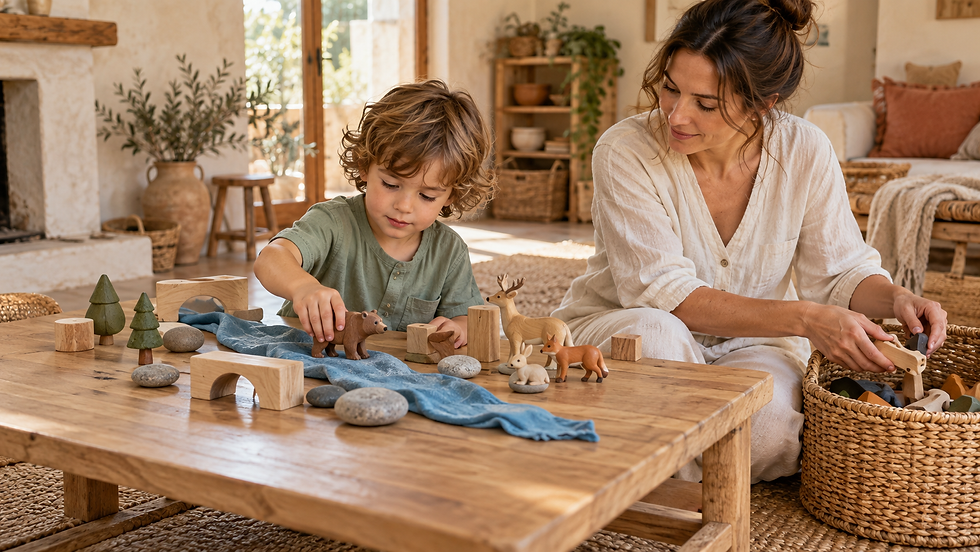
More materials can look exciting to an adult, but they often overwhelm a child. A tray covered with pom-poms, scoops, cups, stones, shells, tongs, paper tubes, stickers, animals, blocks, and bowls leaves no clear starting point. Young children usually play better when the options are limited. Fewer materials help them notice texture, shape, sound, movement, and possibility.
Too many choices can lead to dumping, scattering, and quick boredom. A cluttered setup also makes it harder to tidy. When the activity turns into a mess within minutes, the adult often steps in too soon. Then the child loses the chance to solve problems, repeat actions, and lead the play.
How to avoid it
Start with three to five types of materials. Think in roles.
One base material Blocks, dough, rice, sand, fabric, paper, or water
One tool Spoon, cup, brush, rolling pin, tongs, or scoop
One set of loose parts Pebbles, leaves, buttons, shells, sticks, lids, or toy animals
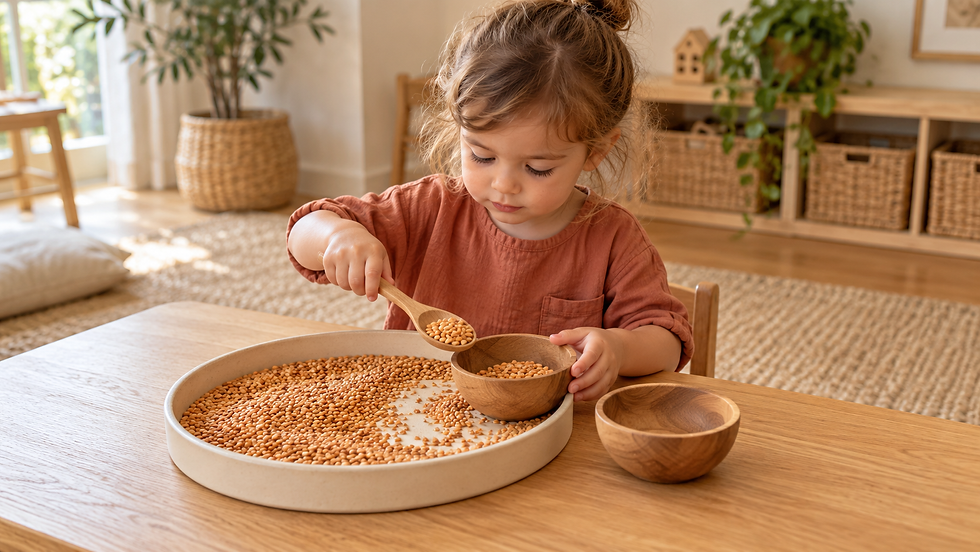
For example, instead of a large sensory bin packed with items, try dry dal with two small bowls and one spoon. Instead of a full craft station, place black paper with chalk and a few leaves. If play grows, add one new item later. Let the child show you what the setup needs.
Mistake 2. Making the invitation too adult-led
An invitation to play is not the same as a planned activity with one correct result. If the setup comes with constant instructions, it stops feeling like play.
This often happens with well-meaning prompts.
“Can you make a pattern?”
“Put the red ones here.”
“Build a zoo.”
“No, the bridge goes this way.”
“Let me show you.”
The child may follow for a while, but the energy changes. Instead of wondering, testing, and creating, they wait for approval. Some children become quiet and careful. Others push back.
Play needs room for strange ideas. A child may use shells as food, blocks as beds, or cups as hats. That is not a failure of the setup. That is the setup working.
How to avoid it
Use open language and then step back.
Try:
“I wonder what these could become.”
“You found a new way to stack them.”
“That made a loud sound.”
“Tell me about this when you are ready.”
If the child asks, “What should I make?”, offer a gentle possibility, not a command.
“You could build with them, sort them, or make your own idea.”
Then stop talking for a moment. Silence gives children space to think. It can feel awkward at first, especially if you are used to guiding every step. Stay nearby, but let the child lead.
Mistake 3. Choosing materials that do not match the child’s stage
A setup can be beautiful and still be wrong for the child using it. The most common mismatch is offering materials that are too advanced, too fiddly, too fragile, or unsafe for the child’s current stage.
A toddler who still mouths objects should not be offered tiny beads or loose buttons. A child who is learning to pour may become frustrated by narrow-neck bottles. A preschooler who loves large movement may ignore a delicate paper activity because their body needs climbing, carrying, pushing, or building.
When the setup does not match the child, adults often read it as disinterest. In reality, the child may be saying, “This is too hard,” “This is not safe for me,” or “My body needs something else.”
How to avoid it
Watch what the child already does in free play.
Do they fill and empty containers? Offer cups, baskets, and soft objects.
Do they line things up? Offer cars, stones, blocks, or animal figures.
Do they tear paper? Offer scrap paper, cardboard, and glue instead of asking them not to tear.
Do they climb and carry? Create a bigger invitation with cushions, baskets, fabric, or large cardboard boxes.
Match the materials to the child’s actual interests, not only to an idea found online. Online setups can inspire you, but the real child in front of you matters more. Safety also comes first. Avoid small loose parts for children who mouth objects. Check for sharp edges, choking hazards, toxic materials, and fragile items. Supervise water play, even when the water is shallow.
Mistake 4. Trying to make every setup educational
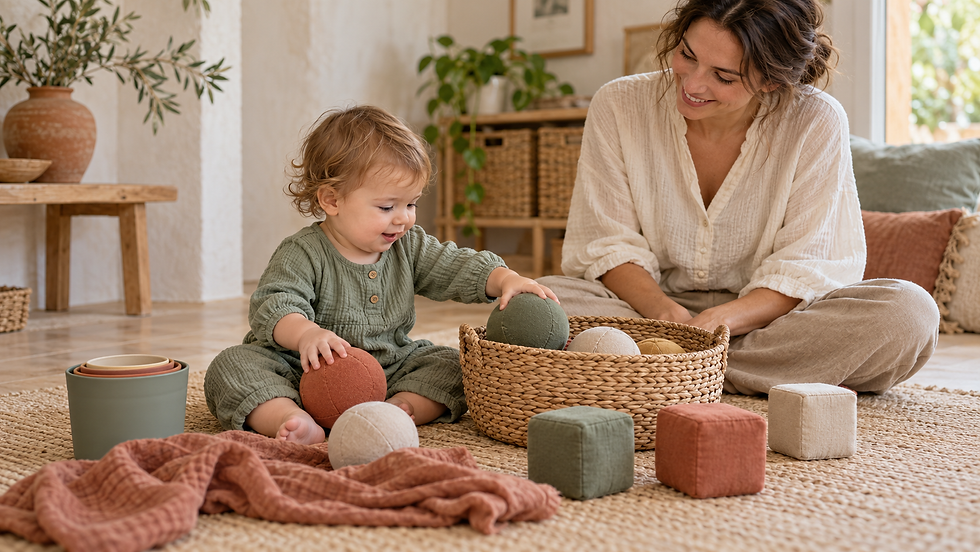
Parents often feel pressure to make play count. Colours, numbers, alphabets, early writing, fine motor skills, sorting, counting, and vocabulary all get packed into one small activity.
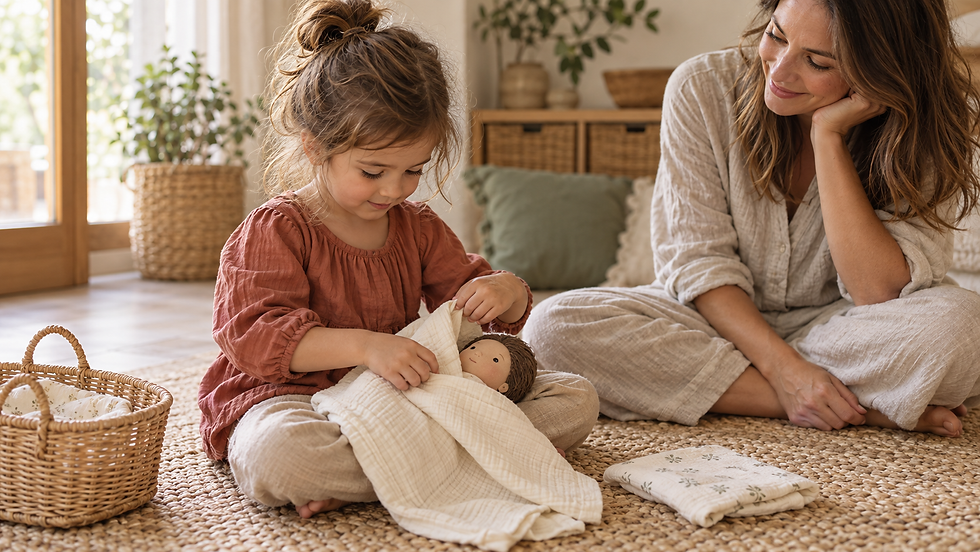
Children do learn through play, but play does not need a visible lesson every time. A child pouring water from one steel tumbler to another is learning about volume, force, sound, grip, and control. A child mixing mud is exploring texture, change, and cause and effect. A child wrapping a doll in cloth is building care, planning, and imagination. When every invitation is loaded with a learning goal, the child may feel watched. The setup becomes a task.
How to avoid it
Plan for curiosity first. Learning will follow.
A useful question is, “What can the child do with this?” rather than “What can I teach through this?”
Here is a simple way to shift the setup.
Instead of this | Try this |
“Sort all the colours correctly.” | “Here are coloured bottle caps and small bowls.” |
“Make the letter A with sticks.” | “Here are sticks, string, and paper.” |
“Count ten shells.” | “Here are shells, sand, and a tray.” |
“Copy this exact craft.” | “Here are paper shapes, glue, and crayons.” |
This does not mean you never name colours or count objects. You can join naturally when the moment appears. If the child places three stones in a bowl, you might say, “Three stones fit in that bowl.” Then let play continue.
Mistake 5. Expecting the child to play the way you imagined
Adults often picture the play before it begins. The animals will go in the forest. The stones will become a road. The dough will become laddoos. The cotton balls will become clouds.
Then the child enters and does something completely different. The animals go into the water bowl. The stones become birthday cakes. The dough is chopped into tiny pieces. The cotton balls are stuffed into a box.
This is where many invitations get interrupted.
“No, not like that.”
“That is not what this is for.”
“Don’t mix those.”
“Keep it neat.”
Some limits are needed, of course. Throwing hard objects at people is not okay. Water does need boundaries. Paint should stay in the agreed area. Yet many interruptions are about adult expectations, not safety.
How to avoid it
Before you step in, ask yourself one question.
Is this unsafe, or just different from what I expected?
If it is unsafe, set a clear limit.
“Water stays in the tray. If it goes on the floor again, we will put the water away.”
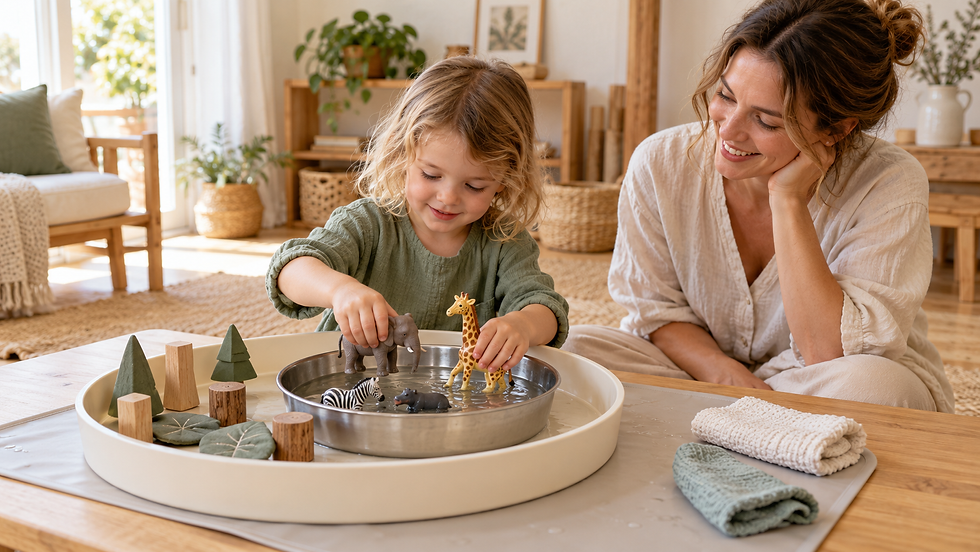
If it is simply unexpected, pause. Watch for a little longer. Children often have a plan that is not obvious at first. You can protect your home without controlling the play. Use a mat, towel, tray, old bedsheet, balcony space, or bathroom floor for messy invitations. Keep a cleaning cloth nearby. Offer smaller amounts of water, paint, or rice.
Boundaries and freedom can sit together.
Mistake 6. Setting up play at the wrong time
Even the best invitation will fail if the timing is off. A tired child may not want open-ended play. A hungry child may scatter materials because they cannot settle. A child who has just returned from school may need connection or rest before exploring a setup.
Adults often place an invitation when it suits the household schedule, then feel disappointed when the child refuses. The problem may not be the idea. It may be the timing.
How to avoid it
Notice when the child usually plays well. Some children engage deeply in the morning. Some settle after a snack. Some need outdoor play first. Some play best when an adult sits nearby for the first few minutes.
Keep invitations low-pressure. You can say, “I put this here in case you want to explore it.” Then leave it available for a while.
If the child ignores it, that is fine. Try again later, or pack it away and reintroduce it another day. Repetition is not boring for children. A familiar setup often becomes richer the second or third time because the child knows how to begin.
Mistake 7. Hovering too much or disappearing too soon
There are two common adult patterns. One is hovering. The adult watches closely, comments often, corrects small choices, and asks many questions. The other is disappearing completely, expecting the setup to entertain the child without any human connection.
Most children need something in between.
An invitation to play works best when the adult is calmly available. That may mean sitting nearby with tea, folding laundry in the same room, or joining briefly when invited. The adult presence helps the child feel secure, but the adult does not take over.
How to avoid it
Try the “nearby, not in charge” approach.
Sit close enough to notice safety and respond warmly. Keep your hands out unless the child asks for help or the material truly needs support. Comment less than you think you should.
Use short observations.
“You balanced the big block on top.”
“The spoon is full.”
“That tower fell and you tried again.”
Avoid turning the whole play session into a quiz.
Questions like “What colour is this?” and “How many are there?” have their place, but too many can break concentration. Observation often feels more respectful than testing.
Mistake 8. Making the setup too hard to clean
A setup that creates stress for the adult will not last. If paint reaches the sofa, rice spreads across three rooms, or water soaks books, everyone ends the session irritated.
Messy play has value, but it needs structure. Children can handle clear physical limits. A tray, mat, basket, or defined corner helps them know where the play belongs.
How to avoid it
Design the cleanup before you invite the play.
Use:
A large tray for loose parts
An old bedsheet under dry sensory play
A towel under water play
Small quantities of messy materials
Washable tools and surfaces
A basket for quick collection
Choose the location carefully. In many Indian homes, the balcony, bathroom floor, verandah, or a washable corner can work better than the main living area.
Invite children into cleanup without turning it into punishment. Keep it simple.
“The stones go back in this basket.”
“We will wipe the table together.”
“The wet cloth goes near the sink.”
A child may not clean perfectly, but they can take part. That sense of closure helps them understand care for materials.
Mistake 9. Changing the setup too often
It is tempting to create a new invitation every day. Fresh trays look appealing, and novelty can be fun. Yet constant change is not always helpful.
Children learn through repetition. They return to the same action again and again, testing tiny changes. Pouring, stacking, wrapping, hiding, rolling, sorting, and mixing all become deeper with repeated chances.
If the setup changes too quickly, the child may never reach that deeper stage. They keep starting over.
How to avoid it
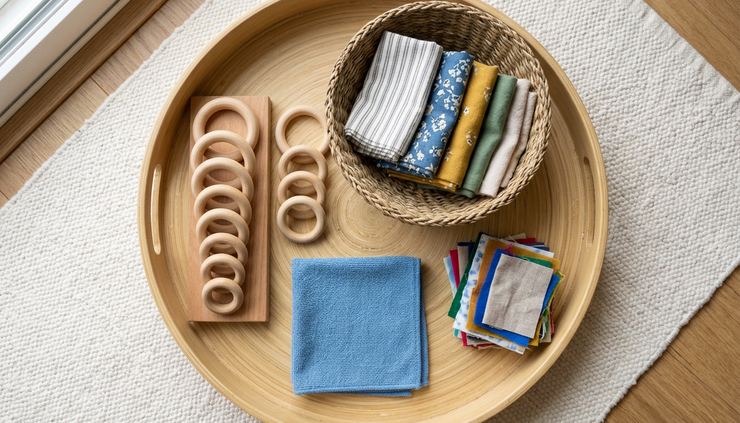
Leave strong setups available for more than one day if space allows. Rotate one part instead of replacing everything.
For example:
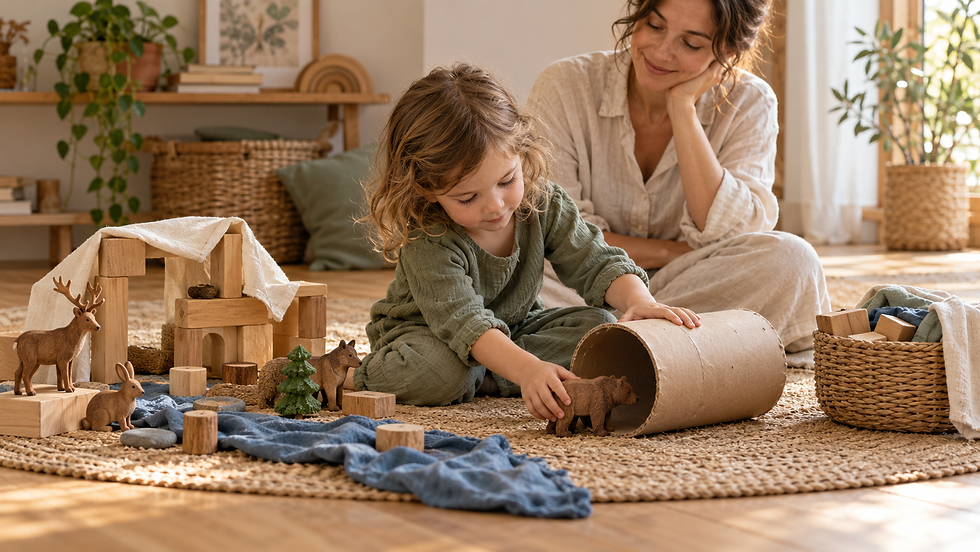
Day one Blocks and animal figures
Day two Add fabric pieces for homes, rivers, or blankets
Day three Add cardboard tubes for tunnels
The base stays familiar. The new item gives fresh energy.
You can also keep a few dependable invitations ready. A basket of blocks, cloth pieces, containers, paper, and crayons can be used in many ways without needing a new theme each time.
What a good invitation to play usually includes
A strong setup does not need to be expensive, themed, or picture-perfect. It usually has a few simple qualities.
It is open-ended.
The child can use it in more than one way.
It is easy to enter.
The child can begin without waiting for long instructions.
It matches the child’s stage.
The materials suit their skills, interests, and safety needs.
It has clear boundaries.
The space and materials are manageable.
It leaves room for surprise.
The adult does not need to know the final outcome.
Here are a few simple invitation ideas that work well at home:
Steel cups, a small jug, water, and a towel
Chapati dough, a rolling pin, and bottle caps
Cardboard boxes, scarves, and soft toys
Leaves, crayons, and plain paper
Wooden blocks, toy vehicles, and paper strips
Ice cubes in a bowl with spoons and small cups
Fabric scraps, pegs, and a low clothesline
Stones, chalk, and a floor mat
The best invitation is often made from what is already in the house.
A calmer way to begin
Start small. Choose one low-risk setup and offer it when the child is likely to be rested and fed. Put out fewer materials than you think you need. Say one inviting sentence, then step back.
Watch what happens before adding instructions.
If the child plays for only five minutes, that is still useful. If they use the materials in a strange way, stay curious. If the setup fails completely, learn from it. The goal is not to create perfect play. The goal is to create conditions where real play can begin. The biggest invitation to play mistakes usually come from doing too much: too many materials, too many goals, too many instructions, too many expectations. A better setup often feels quieter. It gives the child a clear beginning and the freedom to take it somewhere unexpected.


Comments