The Incredible Benefits of Sensory Play for Babies, Toddlers, and Preschoolers
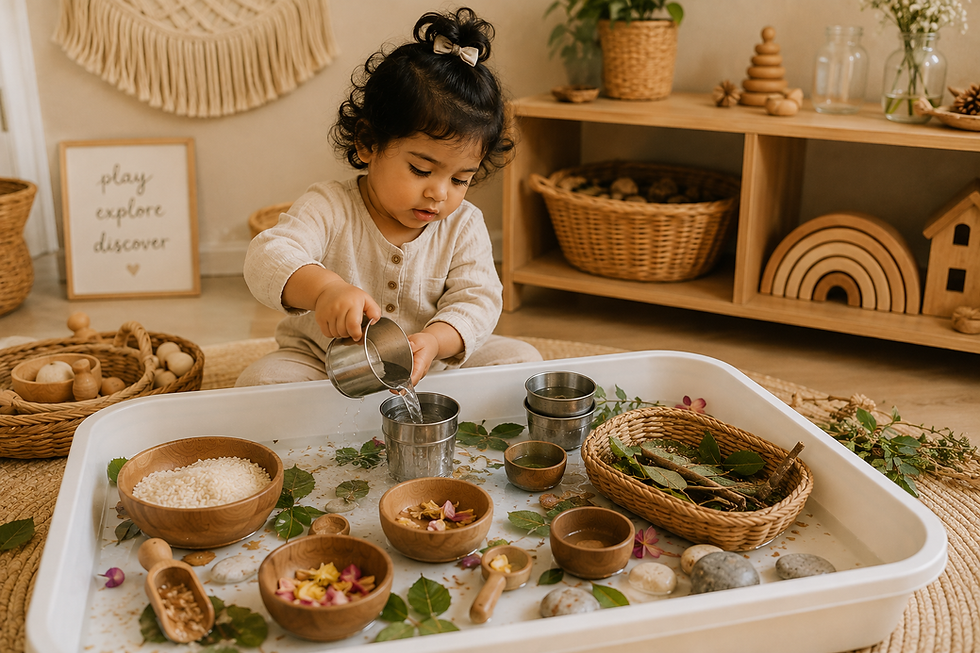
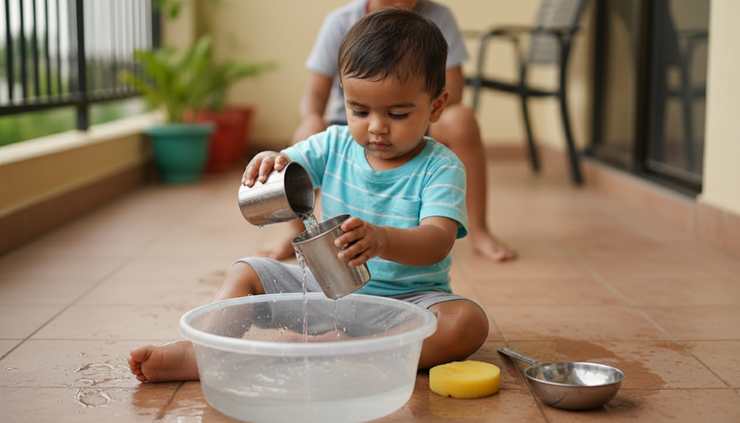
A baby squishing cooked rice between tiny fingers is not “just making a mess”. A toddler pouring water from one steel tumbler to another is not “just playing”. A preschooler mixing leaves, pebbles, and flower petals into pretend soup is not “just passing time”.
These small moments help young children understand their bodies, their world, and the people around them. Sensory play gives children safe ways to touch, smell, listen, look, move, scoop, pour, squeeze, roll, and explore. It turns everyday materials into powerful learning tools.
The beauty is that sensory play does not need expensive toys. A bowl of water, a tray of atta dough, a soft dupatta, a few spoons, or a basket of safe household objects can become a rich learning experience.
What sensory play really means
Sensory play is any activity that invites a child to use one or more senses. Most people think of touch first, such as sand, water, dough, or finger paint. But sensory play is much broader.
Children also learn through:
Sight-Watching colours mix, bubbles float, shadows move, or light pass through a scarf.
Sound-Shaking a rattle, tapping a spoon on a bowl, listening to water splash, or hearing leaves crunch
Smell-Exploring mild scents like lemon, cardamom, mint, or freshly washed fabric.
Taste-Safe mouthing and tasting in baby play, especially with food-based materials.
Movement-Crawling through cushions, reaching, rolling, climbing, jumping, or dancing.
Balance and body awareness-Figuring out where the body is in space, such as stepping over a pillow or carrying a small bucket.
A child’s brain is constantly sorting this information. Sensory play gives that brain “practice material”. It helps children connect what they feel with what they see, hear, and do.
For example, a toddler learns that a wet sponge feels heavy, water falls downward, and squeezing changes what happens. That one simple action links touch, sight, movement, cause and effect, and problem-solving.
Why sensory play is so powerful in the early years
The first few years of life are full of rapid growth. Children are building movement skills, language, memory, emotional control, and social understanding all at once. Sensory play supports many of these areas together, which is why it is so useful.
It builds brain connections through real experiences
Young children learn best through direct experience. They need to touch the smooth stone, smell the wet mud after rain, hear the cup fall, and see the tower collapse. When a child repeats an action, the brain begins to notice patterns. A baby shakes a rattle and hears a sound. A toddler drops a spoon and sees it fall each time. A preschooler mixes blue and yellow paint and watches green appear. These moments teach early science without worksheets.
Sensory play helps children test ideas in a safe, playful way.
They begin to ask, even before they have the words:
What happens if I press harder?
Will this float?
Can I fill this cup?
Why did the tower fall?
What changes when I add water?
That kind of thinking lays the foundation for curiosity and problem-solving.
It supports language development
Sensory play gives children something real to talk about. Words become easier to understand when they are linked to an experience. A child who feels sticky dough understands “sticky” more deeply than a child who only hears the word. A toddler who pours water can learn words like full, empty, splash, slow, fast, more, less, warm, cold, big, small, and heavy.
Adults can support language by narrating without taking over.
Try simple phrases like:
“The water is cold.”
“You squeezed the sponge.”
“That spoon made a loud sound.”
“The dough feels soft.”
“Your cup is full now.”
For babies, even short sound play matters. Saying “splash splash” during bath play or “tap tap” while gently tapping a bowl helps them connect sounds, actions, and attention. For preschoolers, sensory play can grow into richer conversation. They may describe a pretend recipe, explain how they built a mud wall, or tell a story about animals in a tray of leaves. This builds vocabulary, sequencing, and confidence.
The benefits for babies
Babies explore first with their bodies. They look, listen, grasp, kick, mouth, roll, and reach. Sensory play for babies should be simple, gentle, and closely supervised. At this stage, the goal is not to complete an activity. The goal is safe exploration.
It helps babies understand their bodies
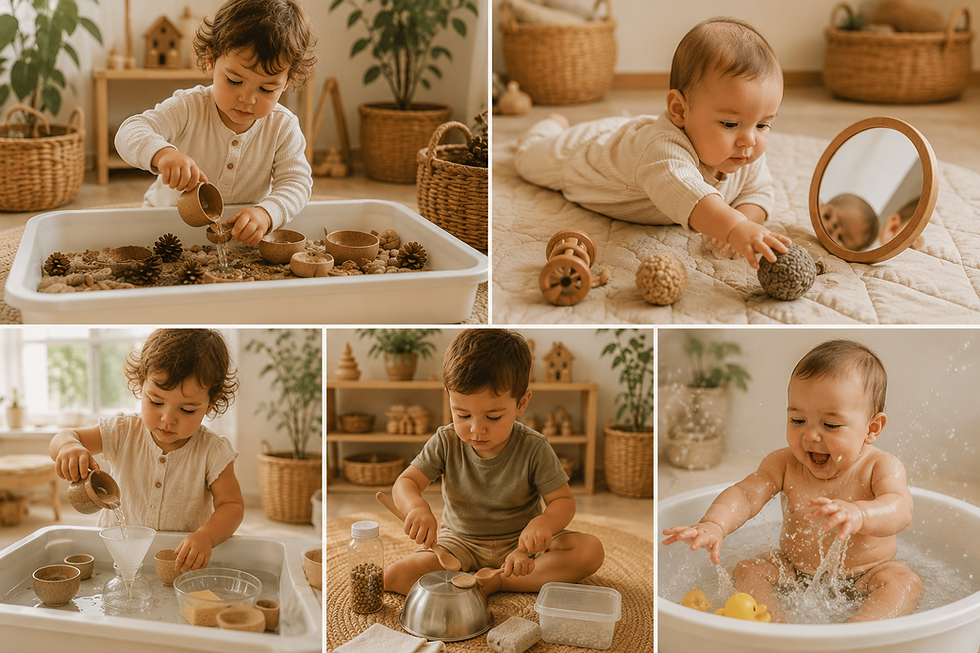
A baby lying on a mat and reaching for a soft scarf is learning more than hand control. They are learning distance, effort, texture, and coordination. Tummy time with interesting but safe objects can encourage babies to lift their head, shift weight, reach forward, and track movement with their eyes. A crinkly cloth, a soft ball, or a large baby-safe mirror can make movement more inviting. Water play during bath time also supports body awareness. A baby feels water on the skin, hears splashes, watches ripples, and begins to understand movement.
It encourages early motor skills
Grasping a large ring, squeezing a soft cloth, patting water, and touching textured fabric all help strengthen little hands. These small hand movements later support feeding, dressing, scribbling, and other self-care skills.
Good baby sensory ideas include:
A basket with large, safe textures such as cotton, silk-like fabric, and soft fleece.
A sealed sensory bag taped firmly to the floor, filled with water and a few large flat shapes.
A shallow tray with cooked, cooled rice for older babies who are ready for supervised food-based play.
Gentle music and slow movement with a caregiver.
Avoid small items, hard grains, beads, buttons, coins, raw pulses, and anything that could break or become a choking risk. Babies explore with their mouths, so safety must guide every choice.
The benefits for toddlers
Toddlers are busy scientists. They want to dump, fill, carry, push, climb, smear, tear, sort, and repeat. Sensory play matches this stage beautifully because it gives toddlers a safe place to practise big urges.
It improves fine and gross motor skills
Scooping dal with a large spoon, rolling dough, squeezing a sponge, peeling tape, or pressing cutters into playdough all build fine motor control. These movements strengthen hands and fingers. Bigger sensory play also supports gross motor skills. Carrying a small bucket of water, walking barefoot on grass, jumping on cushions, or pushing a box across the floor helps toddlers build strength, balance, and coordination. The best toddler activities often combine both. A child may squat to pick up leaves, carry them to a bowl, tear them, stir them, and pour water over them. The whole body is involved.
It helps with emotional regulation
Sensory play can be calming. Repetitive actions like pouring water, kneading dough, brushing sand, or rocking gently can help children settle. This does not mean sensory play fixes every tantrum. Toddlers still need comfort, boundaries, food, sleep, and connection. But sensory activities can give them a healthy way to release energy or calm their bodies.
For an active toddler, try:
Water transfer with cups and spoons.
A pillow path for crawling and stepping.
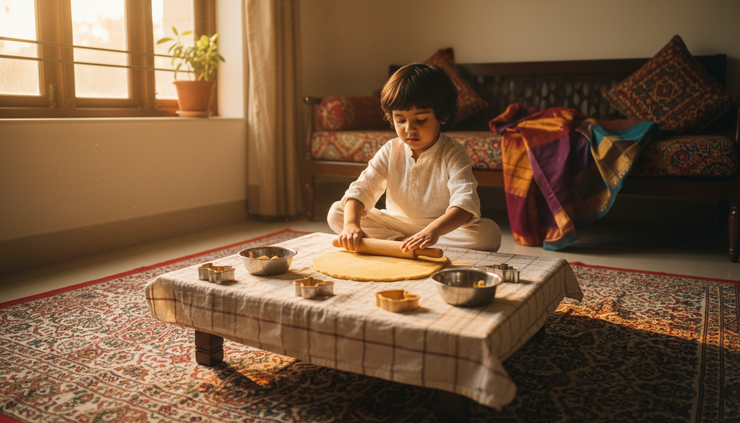
Dough play with rolling and pressing.
A tub of large pom-poms with tongs.
Outdoor play with mud, leaves, and stones that are too large to swallow.
For a child who feels overwhelmed, keep the activity simple. Too many colours, sounds, smells, and textures at once can become stressful. One bowl of water and two cups may work better than a crowded sensory bin.
The benefits for preschoolers
Preschoolers can use sensory play in more complex ways. They are ready for pretend play, sorting, comparing, early measuring, storytelling, and working with friends.
It grows imagination and symbolic thinking
A tray of sand becomes a construction site. Leaves become money in a pretend shop. Dough becomes rotis, laddoos, snakes, or birthday cakes. This kind of pretend play helps children use one object to stand for another, which supports imagination and early literacy.
When children create stories during sensory play, they practise planning and sequencing. They decide who is in the story, what happens next, and how the problem is solved.
It builds early maths and science skillsPreschool sensory play naturally includes counting, sorting, comparing, measuring, predicting, and testing.
A child might notice that:
A big cup holds more than a small cup.
Dry sand pours faster than wet sand.
Some objects sink while others float.
Ice melts faster in warm water.
Long sticks and short sticks can be sorted into groups.
These are early maths and science ideas, learned through hands-on play.
A simple sink-and-float tub can keep a preschooler engaged for a long time. Offer safe objects such as a leaf, cork, spoon, small plastic lid, stone, and toy boat. Ask open questions: “What do you think will happen?” or “Why do you think this one stayed on top?”

How sensory play supports social skills
Sensory play can be deeply social. Children learn to share space, wait for a turn, copy an action, offer an object, ask for help, and notice another child’s idea. With babies, social sensory play may look like eye contact during songs, gentle tickles, or back-and-forth sound play.
With toddlers, it may look like two children filling cups side by side. They may not fully play together yet, but they are learning to be near another child and observe. With preschoolers, sensory play can become collaborative. Children may build a river, run a pretend kitchen, wash toy animals, or create a flower shop. They negotiate roles, solve small conflicts, and practise flexible thinking. Adults can support this without controlling the play. Useful prompts include:
“Can you give them one scoop?”
“You both want the blue cup. What can we try?”
“Let’s wait until the sand timer is done.”
“Tell me about what you are making.”
The goal is not perfect sharing. Young children are still learning. The goal is repeated practice in a warm, safe setting.
Simple sensory play ideas by age
Sensory play works best when it matches the child’s stage. The same material can be used in different ways for different ages.
Age group | Simple ideas | Safety focus |
Babies | Soft fabric basket, tummy time textures, bath splashes, sealed water bags | Avoid small objects and supervise closely |
Toddlers | Water pouring, dough squeezing, sponge play, large pom-pom sorting, barefoot grass walks | Expect mess and choose large, non-toxic materials |
Preschoolers | Sink-and-float play, nature trays, pretend cooking, ice melting, colour mixing | Teach safe use of tools and clean-up routines |
A few easy materials to keep on hand:
Steel bowls and spoons
Measuring cups
Sponges
Old dupattas or scarves
Large shells or smooth stones for older children
Homemade dough
Ice cubes
Leaves, flowers, and sticks from a safe outdoor area
Washable paints
Child-safe tongs
Homemade dough is especially useful. Mix flour, water, a little oil, and food colour if desired. Keep the texture soft and avoid strong scents for younger children. Always check for allergies and sensitivities.
How to make sensory play safe and manageable
Sensory play should feel relaxed, not like a major project. A few practical habits make it easier.
Start small. One tray, one towel, and two tools are enough. Too many items can overwhelm the child and create more clean-up. Supervise closely. This is especially true for babies and toddlers. Never assume a material is safe just because it is natural or commonly used.
Choose taste-safe materials for mouthy children. Cooked rice, mashed banana, yoghurt, or soft edible dough may suit some supervised play. Avoid honey for babies under one year, and be mindful of allergies. Set clear boundaries. Say, “Water stays in the tub,” or “Dough stays on the mat.” Young children may need many reminders.
Prepare for mess. Use a bedsheet, old towel, balcony corner, bathroom floor, or outdoor space. Dress children in clothes that can get dirty. Watch the child’s cues. Some children love messy textures. Others dislike sticky hands, loud sounds, or strong smells. Respecting these cues helps children feel safe. Offer tools like spoons, brushes, or cups if they do not want to touch something directly.
The real value is connection
The most powerful sensory play often happens with an attentive adult nearby. Not an adult who directs every move, but one who notices, responds, and joins when invited.
A child pours water again and again. The adult says, “You filled it right to the top.”
A baby pats a soft cloth. The adult smiles and says, “Soft.”
A preschooler mixes pretend soup. The adult asks, “Who are you cooking for?”
These small responses tell the child, “I see what you are doing. Your ideas matter.
That connection turns play into shared learning.
A simple way to begin today
Choose one activity that fits the child’s age and energy level. Keep it short. Keep it safe. Let the child repeat, explore, and lead.
Try one of these:
For a baby, offer a basket of large soft textures during supervised floor time.
For a toddler, set up a shallow tub with water, two cups, and a sponge.
For a preschooler, make a nature tray with leaves, petals, stones, and small bowls for sorting.
Sensory play does not need perfection. It needs time, safety, and permission to explore. The mess can usually be wiped away. The learning, confidence, and joy last much longer.

Comments