The Ultimate Guide To Invitations to Play: How to Set Up Engaging Activities That Children Can't Wait to Explore.
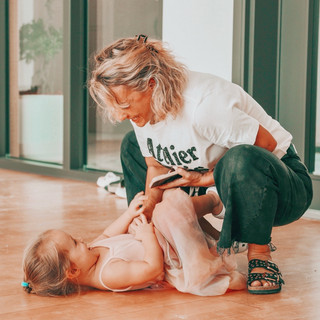
A child can ignore a room full of toys, then spend 40 minutes pouring rajma from one bowl to another. That is the quiet power of a well-set invitation to play. It does not need expensive toys, a Pinterest-perfect shelf, or a long lesson plan. It needs one clear idea, a few thoughtful materials, and enough space for the child to take it somewhere unexpected.
An invitation to play is a simple setup that draws children in without telling them exactly what to do. It says, “Here is something interesting. What could you make, test, sort, build, imagine, or discover?” The best ones are open-ended, safe, and easy to reset. They work at home, in preschools, in activity centres, and even on a balcony on a rainy afternoon.
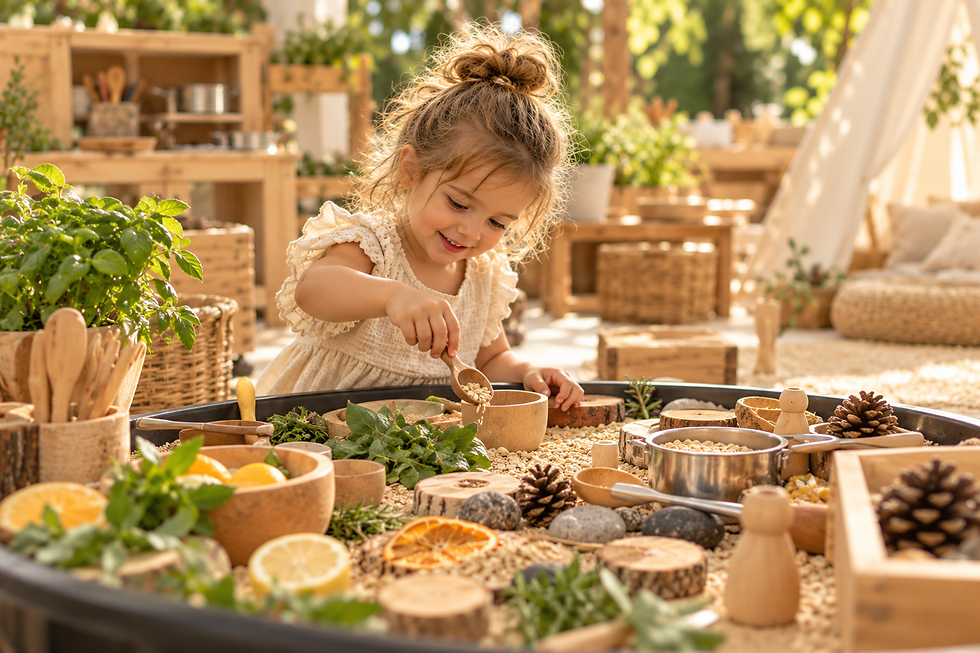
What makes an invitation to play different from an activity
A planned activity often has a fixed outcome. Paint this flower. Match these cards. Build this shape. Those can be useful, but they ask the child to follow an adult’s idea.
An invitation to play leaves room for the child’s idea.
The adult prepares the environment, then steps back. The child may use the materials as expected, or not. A tray of leaves and crayons might become leaf rubbings, pretend food, a sorting game, or a forest for toy animals. All of those are valid.
A strong invitation usually has three features:
It catches attention quickly
The materials are visible, attractive, and easy to reach.
It allows more than one answer
There is no single correct way to play.
It gives the child control
The child chooses the pace, direction, and level of challenge.
This is why invitations to play suit mixed ages so well. A toddler may transfer pom-poms between bowls. A 5-year-old may create patterns. A 7-year-old may invent a shop and write price tags. The same setup grows with the child.
The simple formula for setting up an inviting play space
A good setup does not begin with buying new things. It begins with noticing what the child already reaches for. Water, mud, tiny animals, cardboard boxes, kitchen tools, fabric scraps, bottle caps, bangles, stones, flowers, and dough can all become meaningful play materials.
Use this simple formula:
One base, one action, one twist.
The base is the main material. The action is what the child might do with it. The twist adds curiosity.
For example:
Base | Action | Twist |
Atta dough | Roll and press | Add cloves, leaves, and bottle caps for printing |
Water | Pour and scoop | Add flower petals and small steel cups |
Blocks | Build | Add animal figures and fabric roads |
Paper | Tear and stick | Add glue, twigs, and old magazine pieces |
Rice or dal | Transfer and sort | Add tongs, bowls, and colour cards |
Keep the first setup small. Too many choices can overwhelm children. A tray with five items often works better than a floor covered with 25 things.
Try this layout:
A mat or tray to mark the play area
Two or three containers
One tool, such as a spoon, tong, brush, scoop, or rolling pin
One sensory or creative material
One surprising detail, such as a mirror, torch, magnifying glass, or small figure
The setup should look ready, but not finished. If it looks like a display that must stay perfect, children may hesitate to touch it.
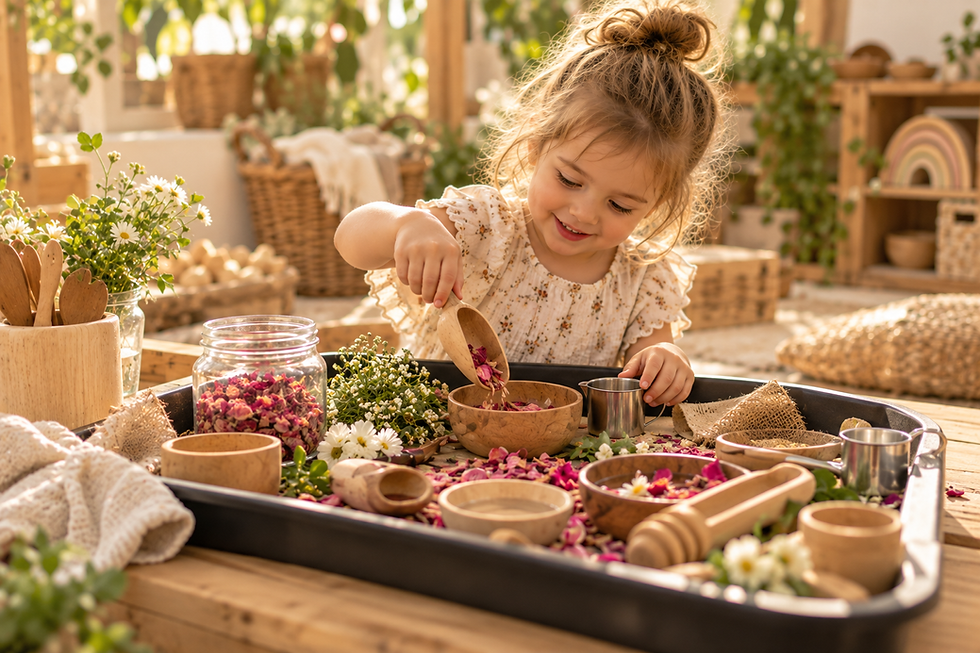
Invitation to play ideas for different kinds of exploration
The best Invitation to Play Ideas That Spark Curiosity and Keep Children Engaged are not complicated. They connect to real things children want to do: pour, mix, hide, stack, pretend, test, and create.
Sensory play that feels rich but stays manageable
Sensory play helps children explore texture, weight, sound, smell, and movement. It often holds attention because children can repeat actions again and again.
Try these setups:
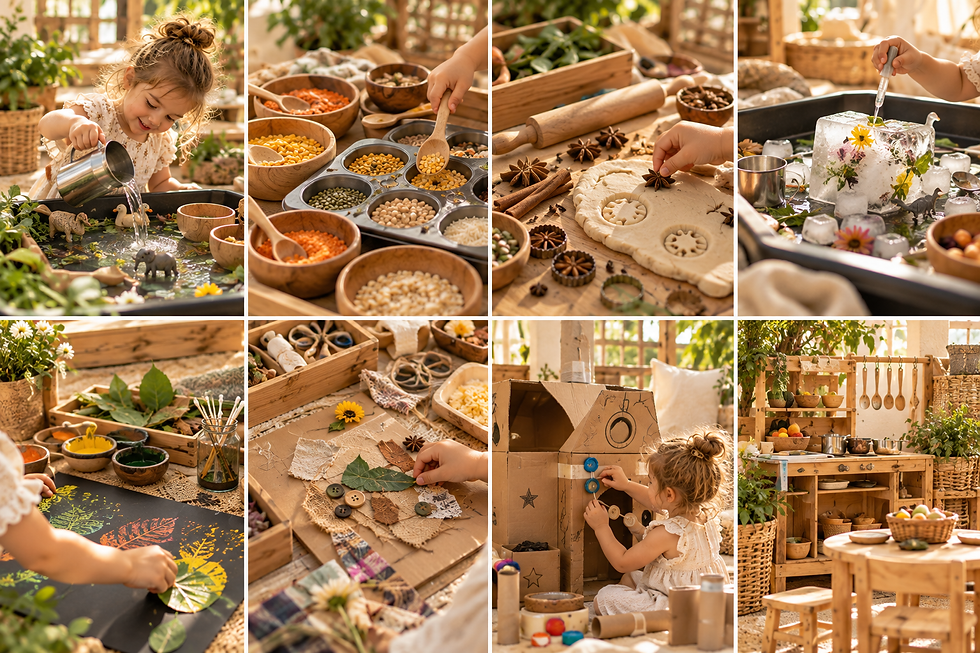
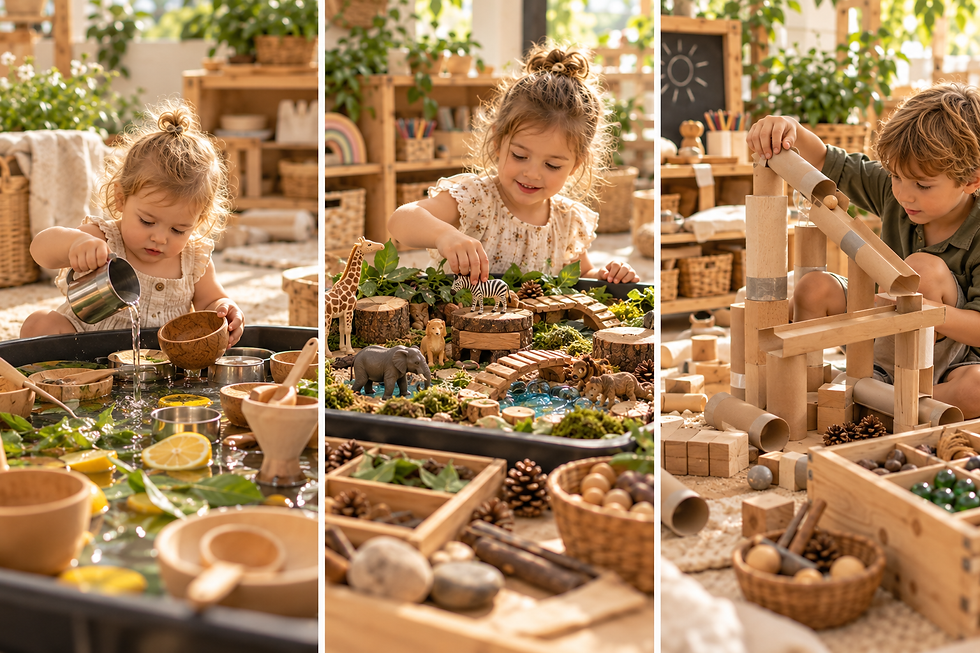
Monsoon water tray
Use a shallow tub with water, leaves, small bowls, and toy animals. Add a towel nearby and keep the water level low.
Dal sorting station
Offer two or three types of dal in small quantities with bowls, spoons, and an empty muffin tray or thali. This is best for children who no longer put small items in their mouth.
Dough and spice prints
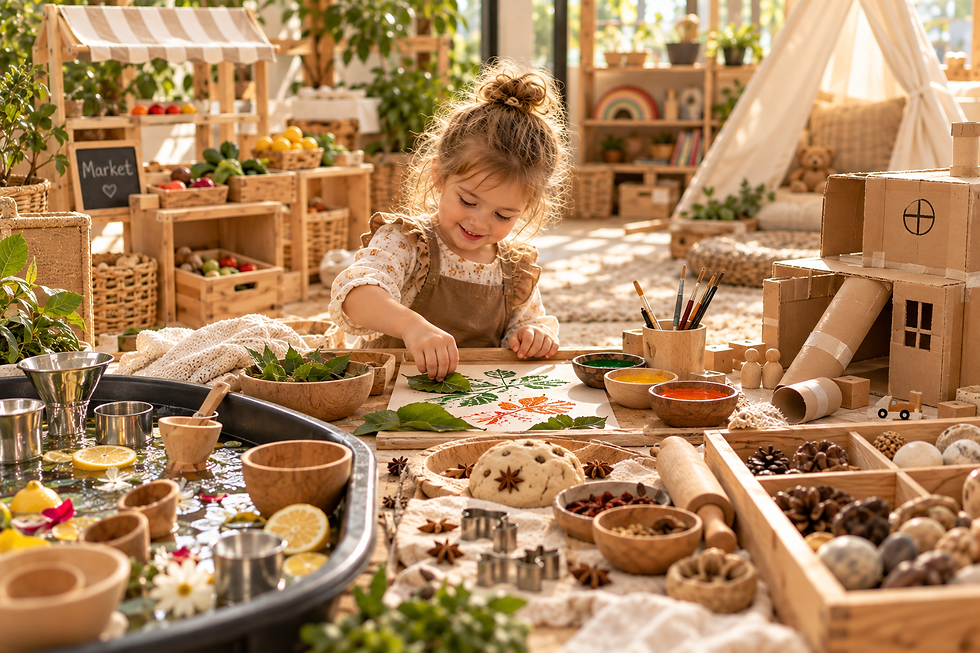
Set out homemade dough with star anise, cloves, cinnamon sticks, bottle caps, and a rolling pin. Children can press, smell, roll, and invent.
Ice rescue
Freeze small safe objects in ice cubes, then offer droppers, warm water, and spoons. This works well on hot afternoons.
For sensory play, define the boundary clearly. A tray, bedsheet, old shower curtain, or floor mat helps children understand where the materials belong. Keep a small broom, dustpan, or cloth nearby so cleanup becomes part of the rhythm.
Creative play that focuses on process
Creative invitations work best when the goal is exploration, not a neat final product. The child may paint with leaves, mix unexpected colours, or glue five buttons in one corner. That process matters.
Try setting out:
Black paper with chalk and cotton buds
Cardboard pieces with glue, fabric scraps, and buttons
Leaves, crayons, and thin paper for rubbings
Watercolours with salt and droppers
Old cardboard boxes with tape, markers, and bottle caps
Avoid showing a model unless the child asks. A sample can turn the invitation into copying. Instead, use process-focused comments:
“You made the blue spread into the yellow.”
“That cardboard tower is leaning. What will you try next?”
“You used the rough side of the leaf.”
These comments show attention without taking over.
Pretend play invitations that build stories
Pretend play often needs fewer props than adults think. Children fill gaps with imagination. A few loose parts can become a home, bus, clinic, restaurant, farm, or space station.
Set up a pretend play corner with:
A dupatta, small bowls, and spoons for a home kitchen
Toy animals, blocks, and leaves for a jungle
Paper slips, crayons, and bags for a market
A towel, soft toys, and bandage strips for a vet clinic
Cardboard, bottle caps, and foil for a rocket workshop
Add one literacy or numeracy element if it fits naturally. A market can have paper money. A clinic can have appointment cards. A restaurant can have a menu. Keep it playful, not like a worksheet hidden in a game.
How to match the setup to the child’s age and stage
Age matters, but interest matters more. A toddler who loves water may focus longer than an older child who is not in the mood. Watch how the child uses materials, then adjust.
For toddlers
Keep it simple, safe, and sensory. Toddlers love filling, dumping, carrying, stacking, and repeating.
Good choices include:
Large blocks
Scarves and baskets
Water with cups
Big pom-poms with scoops
Dough without small add-ons
Cardboard tubes and balls
Avoid small loose parts, sharp tools, and anything that can break into unsafe pieces. Stay close, but do not narrate every move.
For preschoolers
Preschoolers enjoy pretend play, early building, sorting, mark-making, and simple problem-solving. They can handle more materials, but still need clear boundaries.
Good choices include:
Animal habitats with natural materials
Pattern trays with buttons or large beads
Painting with unusual tools
Cardboard construction
Small world scenes with roads, rivers, and houses
Simple science play with magnets, shadows, or floating and sinking
Offer questions only when play slows down. Too many questions can feel like testing.
For early primary children
Older children often enjoy more challenge. They like planning, rules, systems, and making things that work.
Good choices include:
Marble runs with cardboard tubes
Bridge building with blocks and craft sticks
Map-making for toy towns
Nature journals
Sewing cards or weaving frames
Treasure hunts with written clues
Measuring, weighing, and estimating games
At this stage, children may want their work preserved. Take a photo, save part of the creation, or offer a shelf where ongoing projects can stay for a day or two.
How to keep children engaged without controlling the play
The hardest part of an invitation to play is often adult restraint. Once the child starts, the adult may want to correct, suggest, praise, or improve. But too much input can shrink the play.
Try these gentle roles instead.
Be the observer
Watch for what the child is actually doing. Are they sorting by colour, testing sound, repeating a movement, building height, or creating a story? This tells you what to offer next time.
If a child keeps pouring water, the next invitation might include funnels and tubes. If they keep wrapping toys, offer fabric, clips, and boxes.
Use fewer words
Silence can be useful. It gives children time to think.
When you do speak, keep it specific:
“You tried the big scoop, then the small one.”
“The red block is balancing on two blue blocks.”
“You found a way to make it stand.”
Specific language supports attention and confidence better than constant “Good job.”
Add only when needed
If play is fading, add one new material. Do not rebuild the whole setup.
For example:
Add a torch to a block city.
Add blue fabric to an animal scene as a river.
Add envelopes to a mark-making table.
Add tweezers to a sorting tray.
Add a cardboard ramp to cars and balls.
A small change can restart curiosity.
Common mistakes that make invitations less inviting
Even a beautiful setup can fall flat. Usually, the problem is easy to fix.
The setup has too much stuff
Children may touch everything for two minutes, then leave. Reduce the choices. Put out a smaller selection and rotate materials later.
The outcome is too fixed
If the adult expects a specific result, the child senses it. Replace craft templates with open materials. Instead of “Make a butterfly,” try paper, glue, leaves, and crayons.
The materials are hard to use
If scissors are too stiff, glue does not flow, or containers are difficult to open, play turns into frustration. Test the setup before offering it.
The adult steps in too quickly
A little struggle is part of learning. If a tower falls, pause before helping. The child may rebuild, change the base, or turn the fallen tower into something else.
Cleanup feels too big
Large messes can make adults avoid invitations altogether. Use small quantities. Keep cloths ready. Choose washable materials. Offer water play in the bathroom, balcony, or outdoor area when possible.
A week of easy invitation to play ideas
Use this as a starting plan. Repeat whatever works. Children often enjoy the same invitation many times because each round brings a new idea.
Day | Setup | Materials |
Monday | Leaf printing | Leaves, crayons, paper, tape |
Tuesday | Pouring station | Water, cups, funnel, towel |
Wednesday | Mini market | Baskets, toy food, paper money, bags |
Thursday | Cardboard builders | Boxes, tape, tubes, markers |
Friday | Dough kitchen | Dough, rolling pin, bowls, safe spices |
Saturday | Shadow play | Torch, toys, white sheet, blocks |
Sunday | Nature sorting | Stones, shells, seed pods, trays |
If a child is deeply engaged, leave the setup out longer. There is no need to change activities just because a plan says so.
Safety and setup checks before children begin
Open-ended play still needs clear safety thinking. Before offering any invitation, check the space and materials.
Use this quick checklist:
Materials are safe for the child’s age.
Small parts are avoided for children who mouth objects.
Edges are smooth and tools are child-friendly.
Water play is supervised at all times.
Allergens, strong scents, and irritants are avoided.
The floor is not slippery.
The child can reach everything without climbing.
Cleanup materials are nearby.
Natural materials need checking too. Wash leaves, shells, stones, and seed pods. Avoid unknown berries, sharp sticks, mouldy items, or anything collected from polluted areas.
What success looks like
A successful invitation to play does not always look calm. It may be noisy, messy, repetitive, or strange to adult eyes. The real signs are different.
Look for:
Focus that lasts longer than usual
Repeated attempts
New uses for familiar objects
Pretend stories or problem-solving
Requests to return to the setup
Pride in showing what happened
Calm cleanup with some support
The goal is not to entertain children every minute. The goal is to create conditions where curiosity can take the lead.
Start with one tray this week. Choose a base, add one action, and include one small twist. Then step back and watch. Children often show exactly what they need next when they are given the space to explore.

Comments