The Ultimate Guide to Sensory Play: Activities That Support Learning Through Play
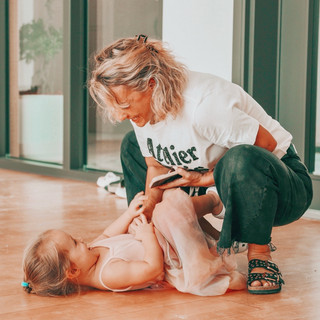
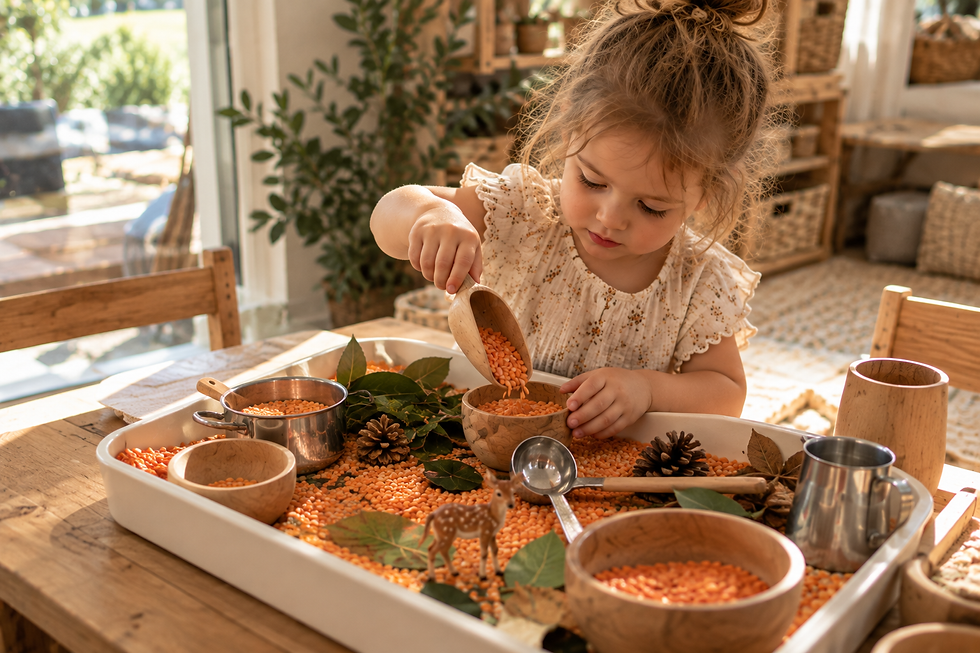
A child squishing dough, pouring water, or sorting rajma and chana may look like they are “just playing”. In reality, they are testing texture, weight, sound, movement, smell, space, and cause and effect. That is the quiet power of sensory play.
Sensory play gives children safe, hands-on ways to explore the world. It supports early language, problem-solving, motor skills, emotional regulation, and social learning. It also suits many homes and classrooms because it does not need expensive toys. A steel bowl, a spoon, some atta dough, water, leaves, fabric, or kitchen-safe grains can become a rich learning activity.
This guide explains what sensory play is, why it matters, how to set it up safely, and which activities work well for different ages and learning goals.
Sensory play helps children learn with their whole body
Sensory play is any activity that engages one or more senses. Most people think of touch first, such as sand, water, slime, clay, or dough. But sensory learning is broader than that.
Children also learn through:
Sight-Colours, shapes, light, shadows, patterns, and movement.
Sound-Shakers, clapping games, bells, crunchy leaves, and water pouring.
Smell- spices, flowers, herbs, soap, fruit, and natural materials.
Taste Safe food-based exploration, especially for babies and toddlers.
Body awareness-Pushing, pulling, carrying, squeezing, jumping, and stretching.
Balance and movement-Swinging, spinning, crawling, rolling, and climbing.
When children repeat these experiences, the brain starts connecting information. A spoon makes a loud sound on steel but a softer sound on cloth. Wet sand holds shape better than dry sand. A heavy bucket needs two hands. A lemon smells sharp. A ball rolls faster on the floor than on a rug. These are early science lessons, but they arrive through play, not worksheets.
Why sensory play matters for development
It builds fine motor strength
Scooping, pinching, squeezing, threading, tearing, rolling, and pouring prepare little hands for writing, drawing, buttoning, eating, and self-care. A child squeezing a sponge is building hand strength. A child picking up dal with fingers is practising control and coordination.
It supports language growth
Sensory play gives children real words linked to real experiences. “Sticky”, “smooth”, “rough”, “sour”, “heavy”, “empty”, “full”, “float”, and “sink” make more sense when a child can feel or see them. Adults can support this by describing, not testing.
Instead of asking, “What colour is this?” every few seconds, try:
“This dough feels soft.”
“The water is dripping slowly.”
“You filled the cup right to the top.”
“That leaf is dry and crunchy.”
This kind of talk adds vocabulary without stopping the flow of play.
It develops early thinking skills
Sensory play invites children to predict, compare, solve, and experiment. If the cup overflows, what happens? If blocks are placed in water, do they float? If two colours mix, what new colour appears? Children learn through trial and error. A tower falls. A tunnel collapses. A scoop spills. These small problems teach patience and flexible thinking.
It can help with emotional regulation
Many sensory activities have a calming rhythm. Pouring water, kneading dough, brushing sand, sorting pebbles, or squeezing a soft ball can help children settle. Active sensory play, such as jumping or pushing a laundry basket, can also help children release energy before sitting for a story or meal.
Different children respond differently. One child may relax with water play. Another may dislike wet textures but enjoy dry rice or fabric. The goal is not to force a sensation. The goal is to offer safe choices and notice what helps.
How to set up sensory play safely
Good sensory play feels open and relaxed, but safety still comes first.
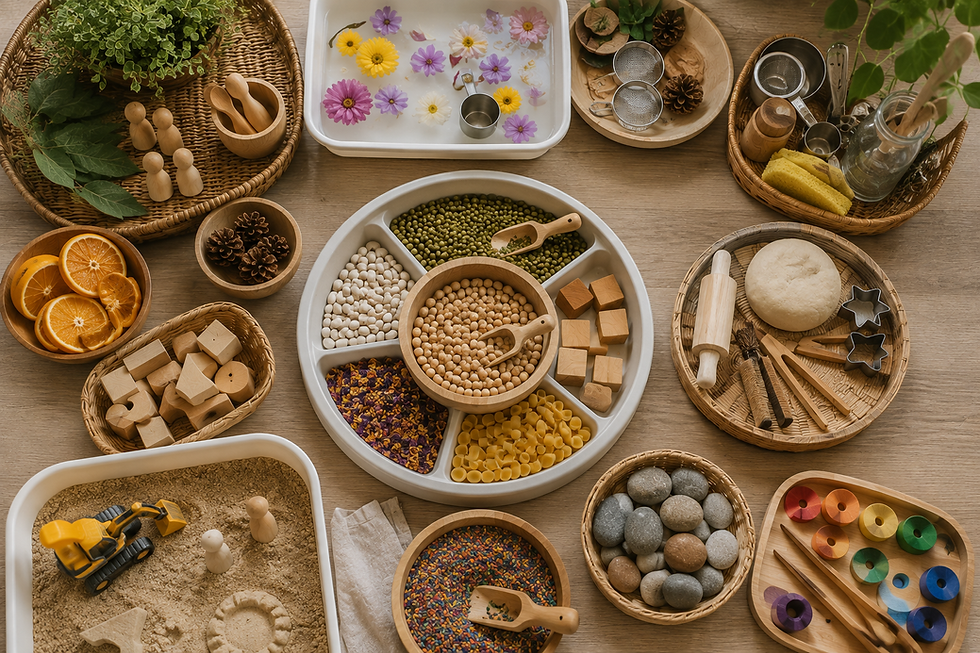
For babies and toddlers, choose taste-safe materials because mouthing is normal. Stay close and avoid small, hard items that can cause choking. Dry beans, beads, buttons, pebbles, and marbles are better for older children who no longer put objects in their mouths.
Keep these safety basics in mind:
Supervise closely, especially with water, small objects, and slippery materials.
Check for allergies before using food items, flowers, spices, or scented products.
Avoid strong fragrances, sharp tools, glass, and anything that can splinter.
Use shallow containers for water play and empty them after use.
Keep floors dry to prevent slipping.
Invite children to wash hands before and after play.
Stop if a child looks distressed, gaggy, overwhelmed, or unusually withdrawn.
Sensory play must suit the child in front of you. Some children enjoy messy textures straight away. Others need a spoon, brush, glove, or dry material first. Both responses are valid.
Simple sensory play activities for every home
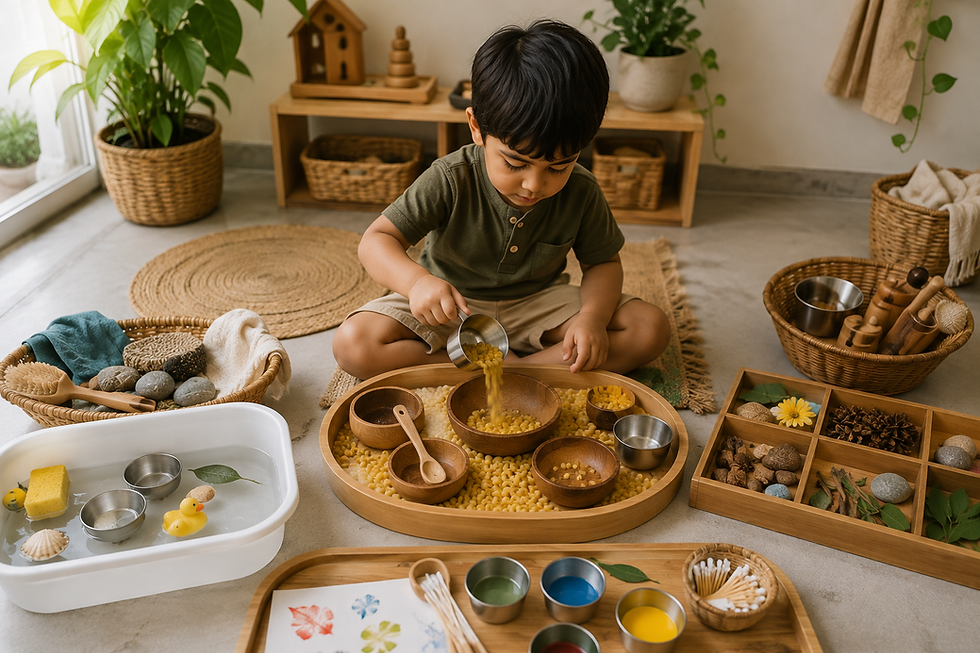
The best sensory activities are easy to repeat. Children learn through doing the same action in new ways. Here are practical ideas that use common materials.
Make a dry pouring station
Place rice, poha, rava, or large pasta in a tray with cups, spoons, funnels, and small steel bowls. Let children scoop, pour, fill, empty, and transfer.
Learning supported:
Hand-eye coordination
Volume and quantity
Focus and turn-taking
Words such as more, less, full, empty, fast, and slow
For younger children, use larger materials that are safer to handle. For older children, add measuring cups and invite them to compare amounts.
Try water play with real tools
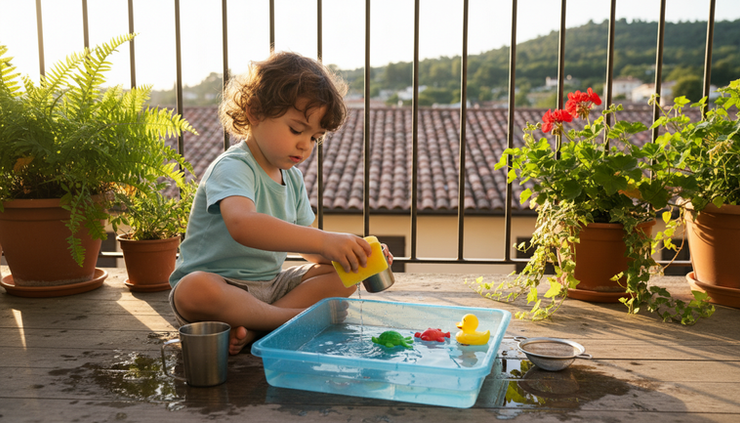
A tub of water becomes a lab when you add sponges, cups, ladles, strainers, and floating toys. Children can squeeze, pour, catch, wash, and test what floats. To keep it manageable, place the tub on a balcony, bathroom floor, or washable mat. Keep a towel nearby and set a clear boundary, such as “Water stays in the tub.”
Learning support
Cause and effect
Early science
Bilateral coordination
Practical life skills
Create a texture basket
Fill a basket with safe everyday textures. Try cotton cloth, silk or satin fabric, jute, a soft brush, a clean sponge, a wooden spoon, a rubber ball, and a smooth stone large enough not to swallow. Let children explore with hands, feet, or cheeks if they want to. Use simple words to describe the feel.
Learning supported:
Sensory discrimination
Body awareness
Descriptive language
Curiosity without pressure
Use nature as the sensory table
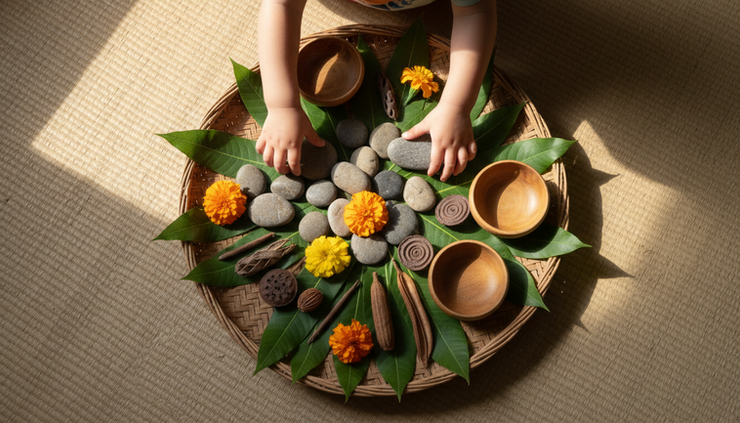
Leaves, flowers, twigs, seed pods, shells, and stones offer rich sensory information. After a walk, children can sort them by size, colour, smell, sound, or texture.
In India, seasonal changes make this especially interesting. Monsoon leaves feel different from dry summer leaves. Fresh jasmine smells different from marigold. Coconut shells, mango leaves, and neem twigs can all become objects of observation.
Learning supported:
Observation
Classification
Respect for nature
Early environmental awareness
Paint without a brush
Set out child-safe paint with cotton buds, leaves, sponge pieces, toy cars, thread, or fingers. Children can stamp, drag, dab, roll, and mix. If mess is a worry, tape paper inside a large tray or use the bathroom wall with washable colour before bath time.
Learning supported:
Creative expression
Visual tracking
Grip strength
Colour mixing
Build a sound basket
Use safe household items that make different sounds. Try a small bell, spoon and steel katori, crinkly paper, wooden blocks, a shaker made with rice in a sealed bottle, and a soft cloth that makes almost no sound. Invite children to compare loud and soft sounds. Older children can close their eyes and guess the object by sound.
Learning supported:
Listening skills
Auditory memory
Rhythm
Attention
Sensory play ideas by age
Children develop at different speeds, so use age ranges as a guide, not a rule. Always adapt for safety and interest.
Age range | Good activity ideas | What to watch for |
6 to 12 months | Water splashing, soft fabric basket, edible mash play, large textured balls | Avoid small objects and supervise mouthing |
1 to 2 years | Taste-safe dough, large pasta scooping, sponge squeezing, finger painting | Keep sessions short and simple |
2 to 3 years | Rice pouring, nature sorting, bubble play, toy washing | Model gentle handling and clean-up |
3 to 5 years | Sink and float tests, colour mixing, pretend cooking, sound matching | Add new words and simple challenges |
5 years and above | Rangoli pattern trays, clay modelling, obstacle courses, measurement play | Invite planning, prediction, and reflection |
For mixed-age groups, set up one main activity with different levels. During water play, a toddler can scoop and splash while an older child predicts which objects will float. During dough play, one child can squeeze while another makes letters, shapes, or pretend food.
How adults can join without taking over
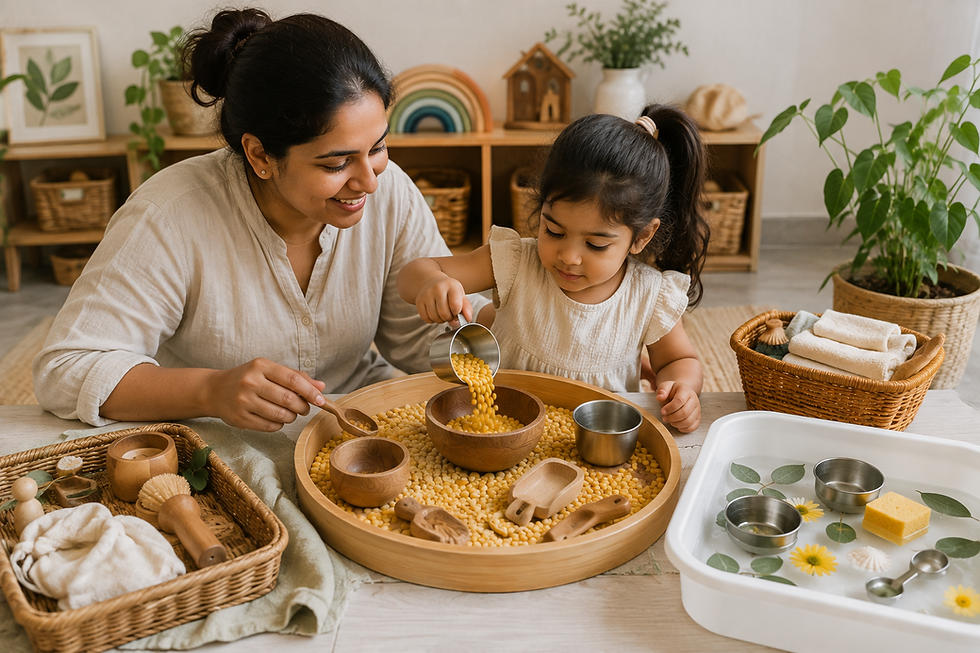
Sensory play works best when adults guide gently. Too many instructions can turn exploration into a task. Try this simple rhythm. Watch first. Notice what the child is already doing. Are they pouring, squeezing, sorting, smelling, or lining things up? Add language. Describe the action. “You are pressing the sponge. The water is coming out.”Offer one new idea. Place a funnel nearby, add a second cup, or ask, “What do you think will happen if we add more water?”Pause. Give the child time to respond. Silence often leads to deeper play. Respect refusal. If a child does not want to touch slime or paint, offer a tool. If they still refuse, move on. The adult role is to make the play safe, rich, and emotionally secure. The child does the real work of learning.
Keep the mess manageable
Mess is one reason many adults avoid sensory play. It helps to plan for containment rather than aim for a spotless activity.
Use a tray, bedsheet, old newspaper, or washable mat. Keep materials small in quantity. A cup of rice is easier to manage than a full bag. Choose one sensory base and two or three tools, not ten different materials at once. Create a clean-up routine from the start. Children can help pour dry materials back, wipe up water, sort tools, or put cloths in a laundry basket. Clean-up is part of learning. It teaches responsibility, sequencing, and care for shared spaces.
For quick play on busy days, try low-mess options:
A texture basket
A sealed sensory bottle
Dough on a tray
Crayons on rough and smooth paper
Ice cubes in a bowl with a spoon
A cloth bag with mystery objects to feel and guess
Use sensory play to support different learning goals
A single sensory setup can support many skills. The trick is to change the prompt, not the whole activity.
Learning goal | Sensory play idea | Adult prompt |
Early maths | Pouring rice into cups | “Which cup has more?” |
Language | Texture basket | “This one feels bumpy. Can you find another bumpy thing?” |
Science | Sink and float tub | “What do you think will stay on top?” |
Social skill | Shared dough play | “Can you pass the roller when you finish?” |
Self-regulation | Sponge squeezing | “Squeeze slowly, then let go.” |
Creativity | Leaf printing | “What pattern can this leaf make?” |
This is where sensory play activities truly shine. They let children practise real skills in a way that feels meaningful and joyful.
When sensory play needs extra support
Some children seek strong sensory input. They may crash into cushions, chew objects, spin often, or love deep pressure. Others avoid sensory input. They may dislike sticky hands, loud sounds, bright lights, tags in clothing, or certain food textures.
These preferences are not misbehaviour. They are clues. Offer choices and notice patterns. A child who dislikes finger painting may enjoy painting with a sponge. A child who craves movement may focus better after carrying a basket of books or jumping on floor spots.
If sensory reactions regularly affect eating, sleep, dressing, school participation, or daily routines, speak with a paediatrician or qualified occupational therapist. This article is for general information and cannot replace professional advice.
A simple weekly sensory play plan
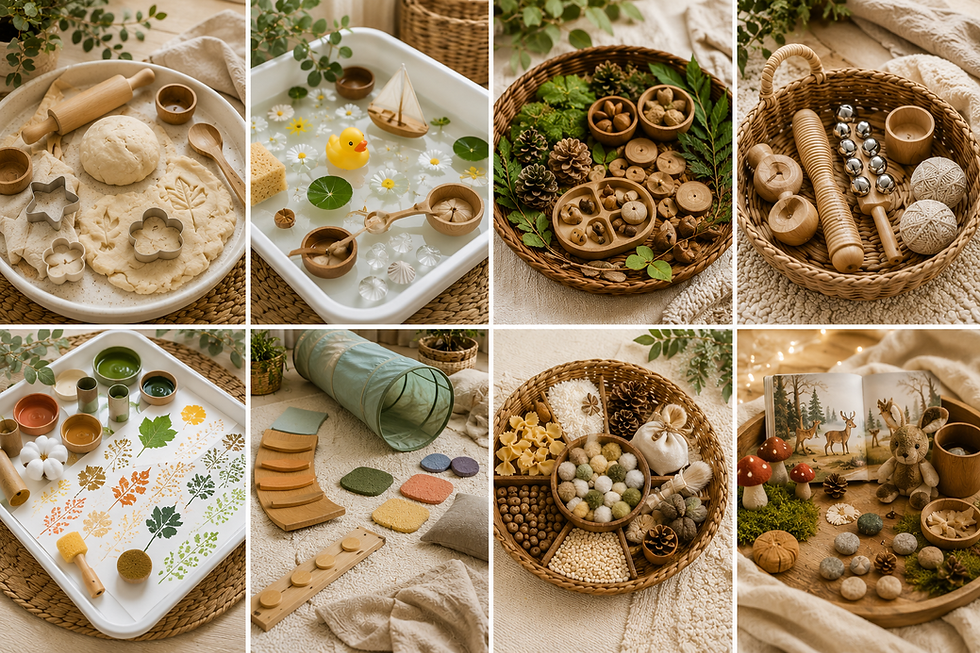
A balanced week does not need many materials. Rotate experiences so children explore different senses.
Monday-Dough play with rolling, squeezing, and pretend cooking.
Tuesday-Water play with cups, sponges, and floating objects.
Wednesday-Nature walk and sorting tray.
Thursday-Sound basket with shakers, spoons, and soft materials.
Friday-Paint stamping with leaves, cotton, or sponge pieces.
Saturday-Movement play with crawling tunnels, cushion paths, and animal walks.
Sunday-Calm texture basket or story time with related objects.
Repeat favourite activities often. Repetition helps children feel confident, and confidence leads to deeper exploration.
The real value of sensory play
Sensory play is not a break from learning. It is one of the most natural ways children learn. They touch, test, repeat, compare, move, listen, smell, and wonder. They build words, muscles, ideas, friendships, and confidence through ordinary materials used with care.
Start small. Put out a tray, one safe material, and two tools. Sit nearby, watch what happens, and describe what the child does. That simple moment can become science, language, maths, art, and emotional growth, all through play.

Comments