What Is Sensory Play? Everything Parents Need to Know About This Powerful Learning Experience
A child squishing atta dough, pouring water between steel bowls, sniffing a lemon, or listening to dry leaves crackle is doing more than “just playing”. They are testing the world, collecting information, and building skills through their senses.
That is the heart of sensory play. It looks simple from the outside, but it supports how children learn, move, speak, focus, and understand their surroundings. It can happen with sand, water, clay, rice, paint, music, food, nature, or everyday household objects.
The best part is that it does not need expensive toys or complicated setup. A safe tray of dal, a bowl of water, a spoon, and ten free minutes can become a rich learning experience.
What sensory play means
Sensory play is any activity that encourages children to use one or more of their senses while exploring, creating, and experimenting.
The five senses most people know are:
Touch
Sight
Hearing
Smell
Taste
Children also use two other senses that matter a lot for development.
The vestibular sense helps with balance and movement. Children use it when they swing, spin, crawl, climb, or roll. The proprioceptive sense helps them understand where their body is in space. It is active when they push, pull, carry, jump, squeeze, or stretch.
So sensory play is not limited to messy play. It includes splashing in water, sorting buttons by colour, kneading dough, jumping on cushions, pouring rice, smelling spices, walking barefoot on grass, or listening to different sounds made by household objects.
A child might not be “making” anything at the end. There may be no craft to display. The learning happens through the process.
Why sensory play matters for children
Young children learn with their whole body. Before they can explain ideas in words, they touch, taste, move, watch, repeat, and test. Sensory activities give them safe ways to do this.
It builds brain connections
When children explore texture, sound, temperature, weight, shape, and movement, the brain receives rich information. Over time, these experiences help children make links. A toddler learns that wet sand sticks together, but dry sand falls apart. A preschooler notices that a big container can still be light if it is empty. A child pouring water learns about full, empty, fast, slow, heavy, and light.
These are early science and maths ideas, learned through hands-on experience.
It supports language
Sensory play gives children something real to talk about. Words make more sense when a child can feel or see them.
For example, a child can learn:
Rough and smooth
Sticky and slippery
Loud and soft
Warm and cold
Fast and slow
More and less
Float and sink
Instead of asking too many questions, adults can model language naturally.
“That sponge is soaking up water.”
“You made a long snake with the dough.”
“The rice sounds soft when it falls.”
This kind of talk helps children connect words with real experiences.
It strengthens fine and gross motor skills
Scooping, pinching, squeezing, tearing, threading, pouring, and stirring all build hand strength and coordination. These skills later support self-care tasks such as buttoning clothes, opening lunch boxes, using cutlery, and writing.
Bigger sensory activities build gross motor skills. Jumping, crawling through tunnels, carrying a bucket of water, rolling on a mat, or balancing on a line helps children develop body control.
It encourages problem-solving
Sensory play often creates small challenges.
How can I move all the water from one bowl to another?
Why did the tower fall?
Which spoon fills the cup faster?
How do I make this dough softer?
Children try, fail, adjust, and try again. That is problem-solving in a very natural form.
It can support emotional regulation
Many children find certain sensory experiences calming. Kneading dough, playing with water, digging in sand, rocking, or squeezing a soft ball can help some children settle their bodies. Other sensory play can be energising. Jumping, dancing, climbing, and obstacle courses help children release energy in a safe way.
Every child is different. One child may love finger painting, while another may dislike anything sticky. Sensory play should feel safe and inviting, not forced.
Common types of sensory play
Sensory play can be grouped by the sense it mainly engages, though many activities use several senses at once.
Tactile play uses touch
This is the type most people think of first. It includes textures such as soft, rough, dry, wet, sticky, grainy, fluffy, or smooth.
Examples include:
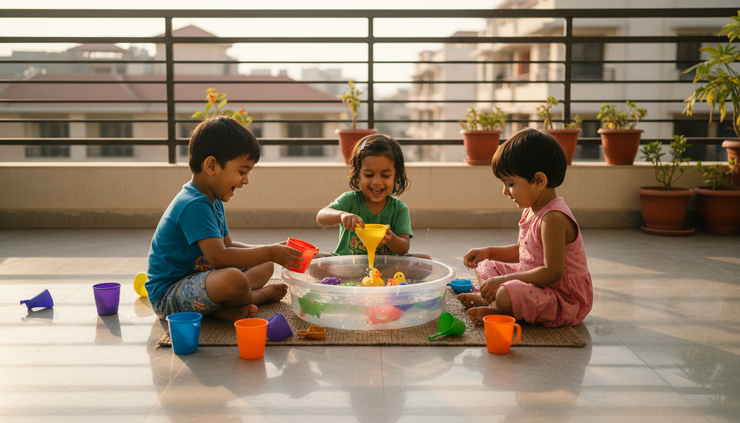
Water play with cups and funnels
Sand or soil play
Atta dough or clay
Finger painting
Cooked pasta play
Rice, dal, or rajma in a sensory bin
Fabric scraps with different textures
For younger children, avoid small items that can be choking hazards. Always supervise closely.
Visual play uses sight
Visual sensory play helps children notice colour, shape, movement, light, and pattern.
Try activities such as:
Sorting blocks by colour
Watching oil and water move in a sealed bottle
Making rangoli-inspired patterns with safe materials
Looking through coloured cellophane
Playing with shadows using a torch
Matching objects by size or shape
Visual play is especially useful when paired with language. “This one is darker.” “That circle is bigger.” “The light moved when you moved the torch.”
Auditory play uses hearing
Children learn to recognise rhythm, volume, pitch, and cause and effect through sound.
Simple ideas include:
Shaking containers filled with rice or beads, sealed securely
Tapping steel plates, wooden spoons, and plastic bowls
Listening for birds, vehicles, rain, or pressure cooker whistles
Clapping patterns
Dancing to music
Making soft and loud sounds with instruments
Sound play can get overwhelming. If a child covers their ears or asks to stop, lower the volume or switch to a quieter activity.
Smell and taste play use food safely
Food-based sensory play can help children explore smell, texture, and taste. This is especially useful around mealtimes, as long as there is no pressure to eat. Examples include smelling mint, lemon, elaichi, cinnamon, roasted jeera, or curry leaves. Children can also compare soft banana, crunchy cucumber, smooth curd, or warm dal. Keep allergies, hygiene, and choking risks in mind. Foods should be age-appropriate and supervised.
Movement play uses balance and body awareness
Movement is sensory play too. Some children need lots of movement to feel settled and focused.
Try:
Crawling under chairs
Walking on a taped line
Animal walks
Jumping on cushions placed safely on the floor
Carrying a small basket of toys
Rolling on a mat
Swinging at a playground
These activities support balance, coordination, and body awareness.
Sensory play ideas by age
Children develop at different speeds, so use age as a guide rather than a strict rule. The goal is to offer safe experiences that match the child’s abilities and interests.
Babies
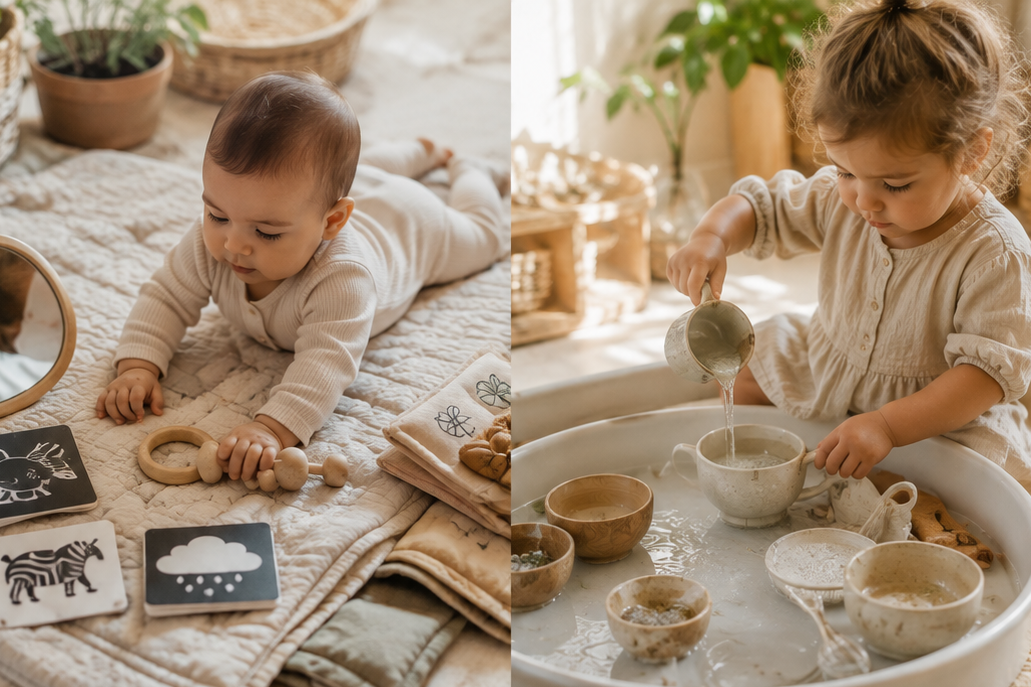
Babies explore through looking, listening, touching, and mouthing. Safety matters most at this age.
Good options include:
Tummy time on different safe fabrics
Soft rattles
Crinkly cloth books
Water splashing during bath time
Gentle songs and clapping
Looking at high-contrast images
Feeling a cool spoon or soft towel
Avoid small loose items, uncooked grains, beads, buttons, and anything that can break into pieces.
Toddlers
Toddlers love repetition. They may pour water from one cup to another twenty times, and that repetition is part of the learning.
Try:
A small tub of water with cups
Dough made from atta and water
Large blocks
Edible finger painting with curd and natural colour from foods
Scooping big pasta shapes
Bubble play
Simple obstacle paths using pillows
Expect spills. Put down an old bedsheet or use a balcony, bathroom, or easy-to-clean area.
Preschoolers
Preschoolers can handle more complex play. They enjoy pretending, sorting, building, mixing, and creating stories.
Ideas include
A pretend kitchen with real utensils
Sand play with moulds
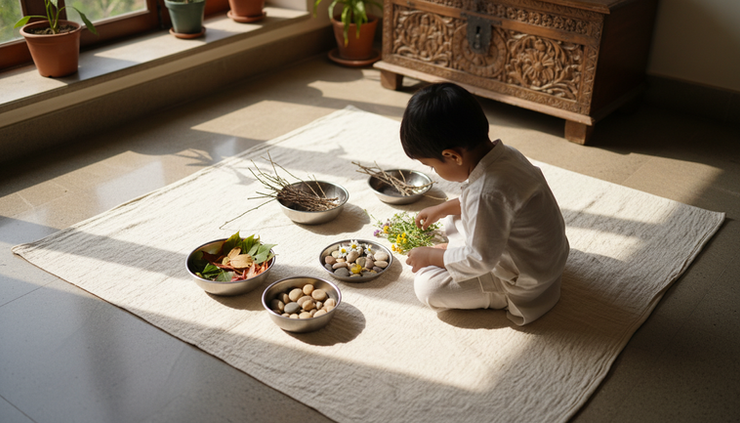
Nature trays with leaves, stones, flowers, and twigs
Sink and float experiments
Making patterns with pulses
Matching smells in small containers
Building with cardboard boxes
This is a good age to introduce words like predict, compare, measure, mix, and change, but keep it playful.
School-age children
Older children still benefit from sensory play, even if it looks different.
They may enjoy
Gardening
Pottery or clay modelling
Cooking with supervision
Slime or safe science experiments
Origami and paper craft
Sports and movement games
Nature walks
Music and rhythm activities
For school-age children, sensory play can become a way to relax after a long day of sitting, listening, and following instructions.
How to set up sensory play without stress
Sensory play should not add pressure to family life. A little planning makes it easier to manage.
Start small
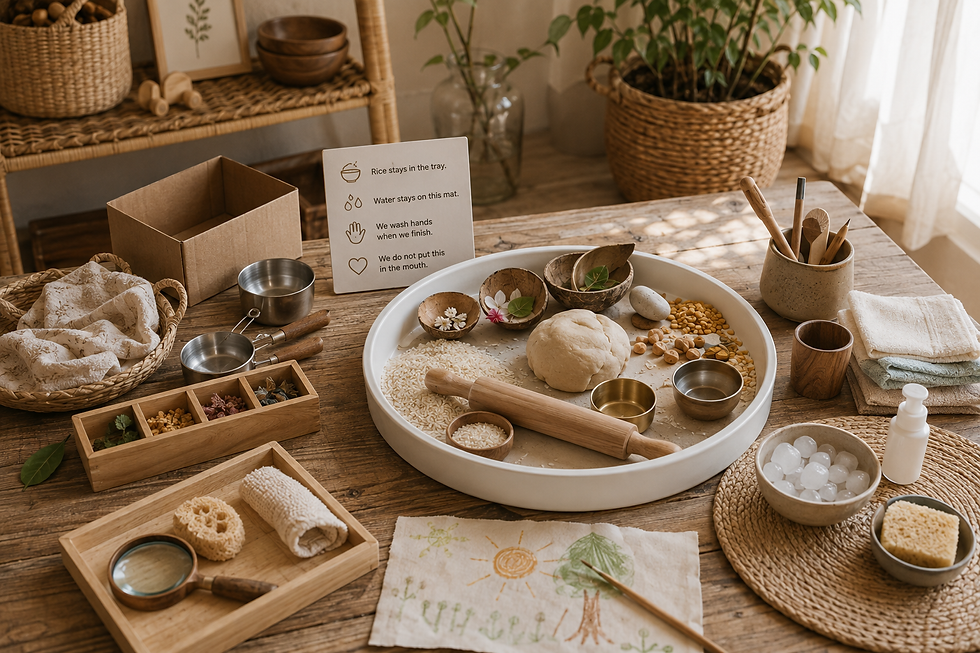
Do not begin with a giant messy setup. Start with one tray, one material, and two tools.
For example:
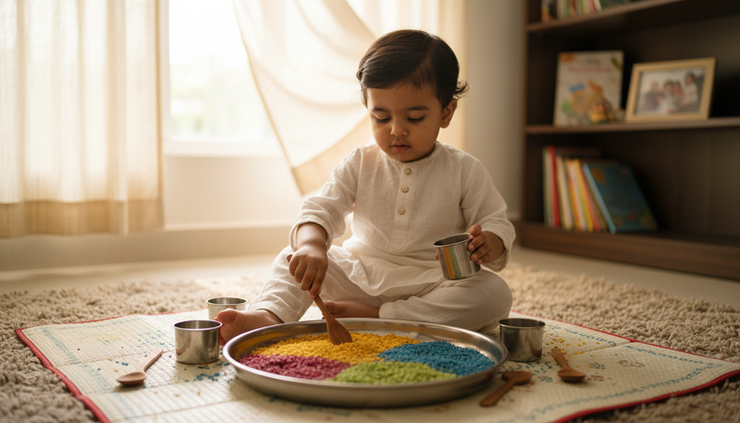
Rice with a spoon and cup
Water with a sponge and bowl
Dough with a rolling pin
Leaves with a magnifying glass
Ice cubes in a bowl on a hot day
Short activities are fine. Even 10 minutes can be valuable.
Use what is already at home
There is no need to buy special kits. Many Indian homes already have useful sensory materials.
Safe options may include:
Atta dough
Rice or poha
Dal or chana for older children
Steel bowls
Measuring cups
Old dupattas or fabric pieces
Cardboard boxes
Coconut shells
Leaves, flowers, and pebbles
Water, soap foam, and sponges
Choose materials based on age and safety. If the child still mouths objects, avoid small dry grains and hard items.
Create clear boundaries
Children enjoy freedom, but boundaries help them feel secure.
Use simple rules:
“Rice stays in the tray.”
“Water stays on this mat.”
“Paint goes on paper.”
“We wash hands when we finish.”
“We do not put this in the mouth.”
Say the rule calmly and show what to do. If the child keeps throwing or tasting unsafe materials, switch to a safer activity.
Dress for mess
Mess feels less stressful when everyone is prepared. Use old clothes, a washable mat, or a plastic sheet. Keep a cloth nearby. If possible, choose the bathroom, balcony, courtyard, or kitchen floor. Messy play does not mean the whole house must become messy. A defined space helps.
Follow the child’s lead
Some children jump straight in. Others watch for several minutes before touching anything. Both responses are normal.
If a child hesitates, offer tools first. A spoon, brush, cup, or stick can help them explore without direct touch. Over time, they may feel ready to use their hands.
Do not force textures on a child. Forced sensory play can make discomfort worse. Gentle exposure works better than pressure.
What to watch for during sensory play
Most sensory preferences are part of normal childhood. One child may love mud, another may hate wet sleeves. Still, strong patterns can tell adults something useful.
A child may need extra support if they often:
Panic at everyday textures, sounds, or smells
Avoid many foods because of texture
Seem unaware of pain, mess, or personal space
Constantly crash, climb, chew, or seek intense movement
Struggle with daily routines because of sensory discomfort
Become very distressed by grooming, bathing, clothing tags, or noise
These signs do not automatically mean something is wrong. They do suggest the child may benefit from support. A paediatrician or occupational therapist can guide families if sensory challenges affect sleep, eating, school, play, or daily care.
This article is for general information and is not a diagnosis or medical advice.
Easy sensory play activities to try this week
A good sensory activity has three things: safety, freedom to explore, and simple materials. These ideas are easy to set up and adapt.
Atta dough bakery
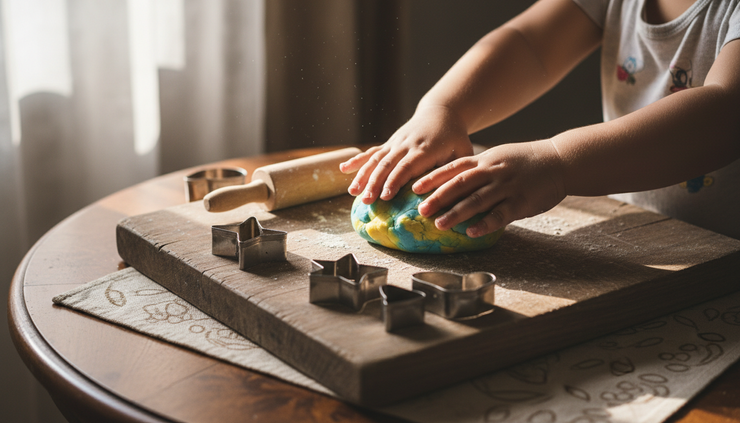
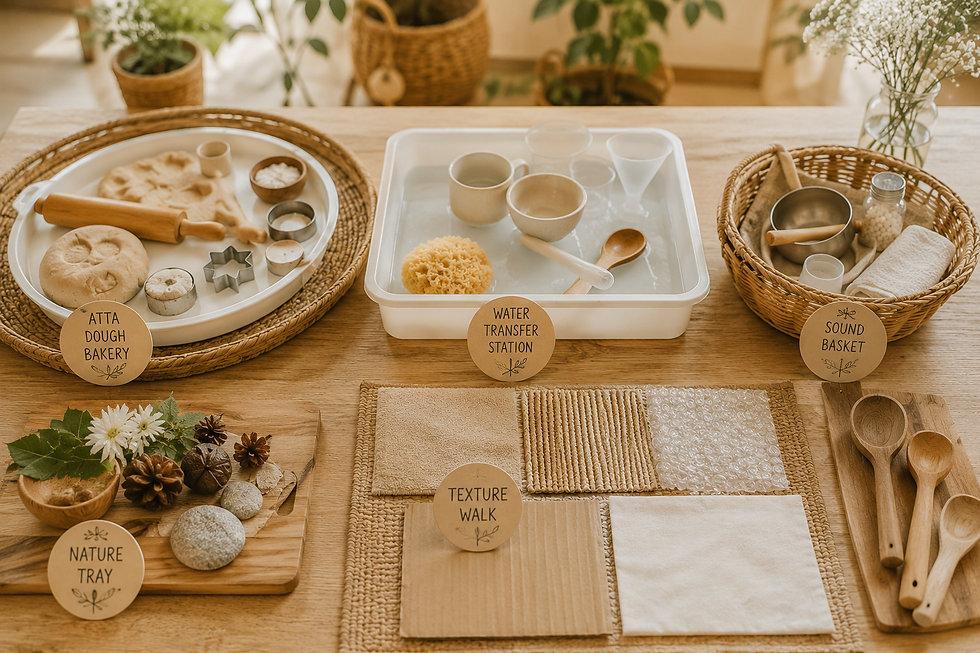
Mix atta with water to make a soft dough. Give the child a rolling pin, bottle cap, spoon, or safe cookie cutter. They can roll, poke, flatten, pinch, and pretend to make rotis or biscuits. This supports hand strength, pretend play, and language.
Water transfer station
Place a small tub of water on the floor with cups, spoons, a sponge, and a funnel. Let the child pour, squeeze, fill, and empty. This builds coordination and introduces early maths ideas.
Sound basket
Collect safe household objects that make different sounds. Try a steel bowl, wooden spoon, plastic container, soft cloth, and sealed shaker.
Ask the child to make a loud sound, a soft sound, a fast beat, or a slow beat.
Texture walk
Place a few safe textures on the floor, such as a towel, mat, cardboard, bubble wrap, and smooth cloth. Let the child walk barefoot, crawl, or press hands on each one. Skip anything slippery or sharp. Hold hands if balance is still developing.
Nature tray
Collect leaves, flowers, seed pods, and smooth stones during a walk. At home, let the child sort, smell, count, arrange, or make patterns. This is calm, low-cost, and easy to repeat across seasons.
The real value of sensory play
Sensory play is powerful because it respects how children naturally learn. They do not need to sit still to understand the world. They need chances to touch, move, listen, smell, look, wonder, and try again. A tray of rice can teach pouring and patience. A lump of dough can build hand strength. A puddle can teach cause and effect. A noisy spoon-and-bowl concert can teach rhythm, volume, and joy. Start with what is safe, simple, and available. Watch what the child enjoys. Add words, give time, keep boundaries clear, and let the play unfold. The learning is already happening.

Comments