The Best Invitation to Play Activities for Every Age: Babies, Toddlers, and Preschoolers
A good play setup does not need expensive toys, a spotless room, or a complicated theme. It needs one clear idea, a few safe materials, and enough space for a child to explore without being hurried.
That is the heart of an invitation to play. You arrange materials in a simple, inviting way, then let the child decide what to do with them. A baby may mouth a soft scarf. A toddler may pour water from one cup to another. A preschooler may turn pebbles into a pretend shop. The adult sets the stage, but the child leads the play.
This guide shares the best invitation to play activities for babies, toddlers, and preschoolers, with easy ideas that work well at home, in early years settings, and in small Indian apartments too.
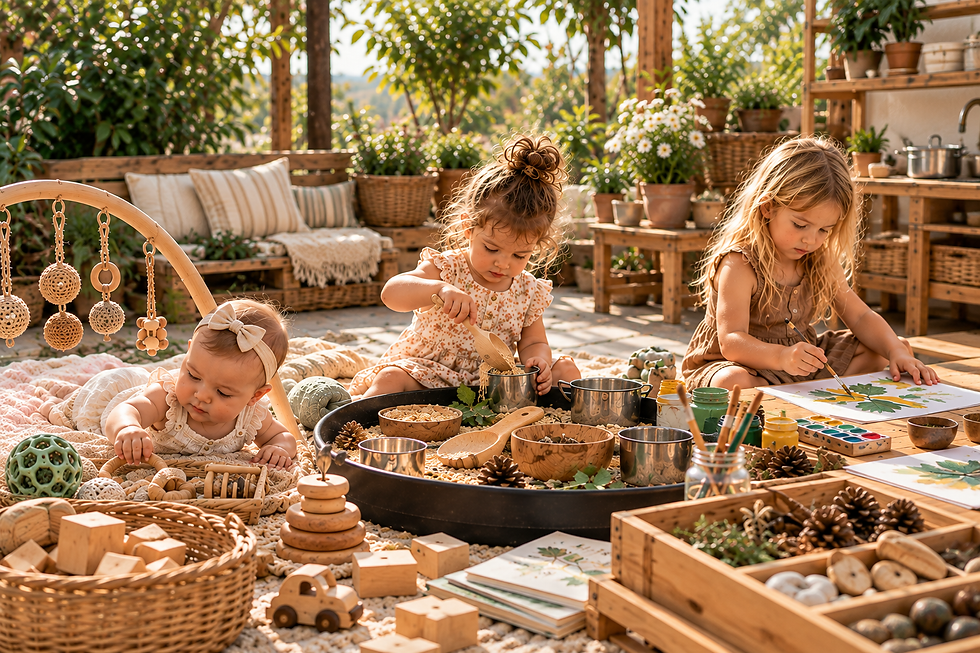
An invitation to play works best when it stays simple
An invitation to play is not a lesson plan. It is more like a gentle suggestion.
Instead of saying, “Build a tower like this,” you place blocks in a basket near a flat tray. Instead of teaching colour names, you offer red, yellow, and blue scarves for a child to wave, sort, hide, or wear. The child brings the idea to life.
A strong setup usually has these parts:
A small number of materials
Too many choices can overwhelm young children. Three to five types of items are usually enough.
A clear space
A mat, tray, low table, or floor corner helps a child see where the play begins.
Open-ended objects
Blocks, fabrics, cups, spoons, shells, cardboard tubes, and water can become many things.
Adult presence without control
Sit nearby, name what you notice, and step in for safety. Try not to fix, test, or direct every move.
Safety matters most. Check all items for choking risks, sharp edges, loose parts, toxic paint, and hygiene. Babies and toddlers explore with their mouths, so choose large, washable materials. Supervise water play at all times, even when the water is shallow.
The best invitations to play for babies focus on senses and connection
For babies, play is about touch, sound, movement, faces, and repetition. A baby does not need a “finished” activity. They need safe objects they can explore slowly
Best age range for these ideas: around 3 to 12 months, adjusted to the baby’s stage.
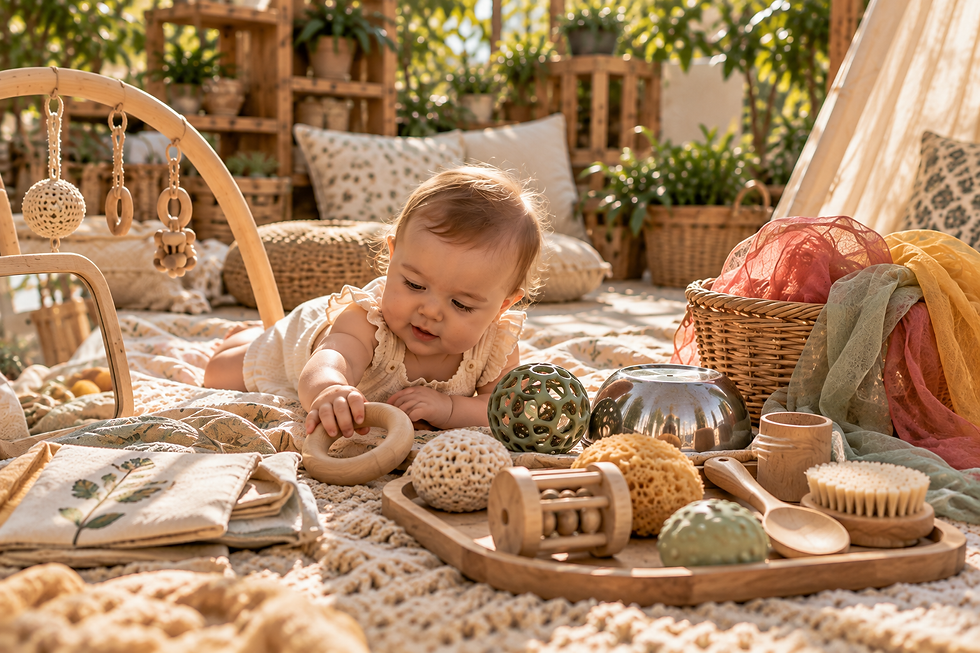
Offer a treasure basket with safe textures
A treasure basket is a low basket filled with everyday objects that feel different. Choose large items that cannot fit into the mouth.
Good options include:
A soft cotton cloth
A large wooden ring
A clean silicone spatula
A textured ball
A steel bowl with smooth edges
A big natural sponge
A soft brush with a thick handle
Place the basket near the baby during tummy time or supported sitting. Let them reach, grab, drop, bang, and mouth safe items. This builds hand control, curiosity, and sensory awareness. It also teaches cause and effect. A steel bowl makes a sound when tapped. A cloth disappears when scrunched. A ball rolls away.
Set up scarf play for peekaboo and movement
Take two or three lightweight scarves or dupattas made from breathable fabric. Place them partly inside a basket or tissue box, with one end showing.
Babies love pulling things out. They also enjoy watching fabric float, cover a toy, or hide a familiar face
Try saying
“You found the yellow scarf.”
“The scarf is on your foot.”
“Where is the rattle? There it is.”
Keep your words simple. The goal is not to quiz the baby. The goal is to connect language with real experiences.
Create a sound tray
Place two or three baby-safe sound makers on a tray. You can use a rattle, a sealed sensory bottle with large beads inside, and a small steel bowl with a wooden spoon. Let the baby hit, shake, roll, and listen. If the sound becomes too loud or stressful, reduce the number of objects.
For younger babies, hold one item at a time and move it slowly from side to side. Watch whether the baby turns towards the sound.
The best invitations to play for toddlers support movement and independence
Toddlers want to do things by themselves. They want to carry, pour, dump, fill, push, pull, stack, and repeat. An invitation to play for toddlers should give them freedom while keeping mess and risk manageable. Best age range for these ideas: around 1 to 3 years.
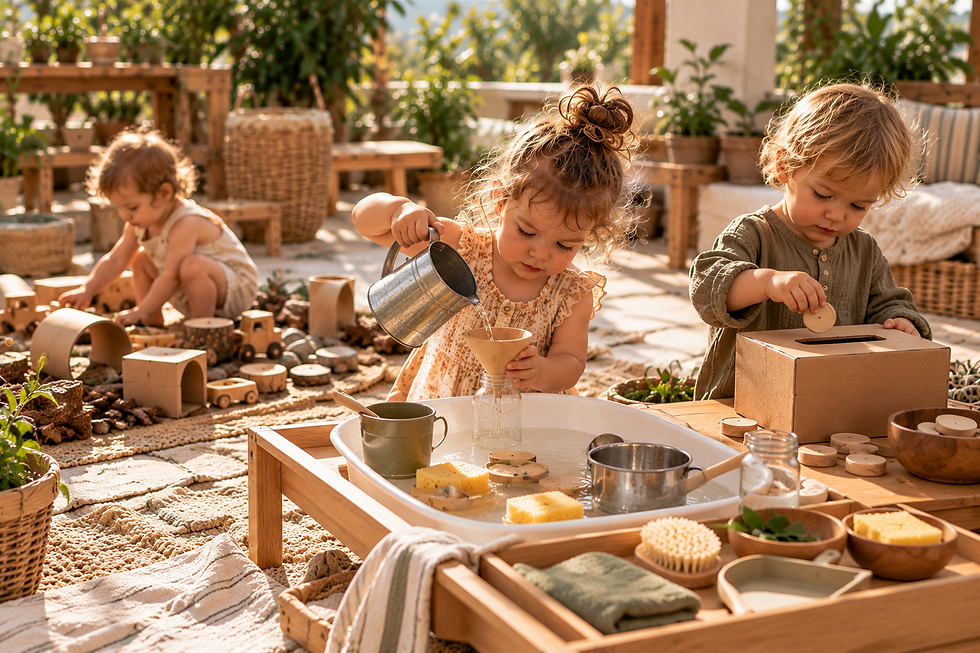
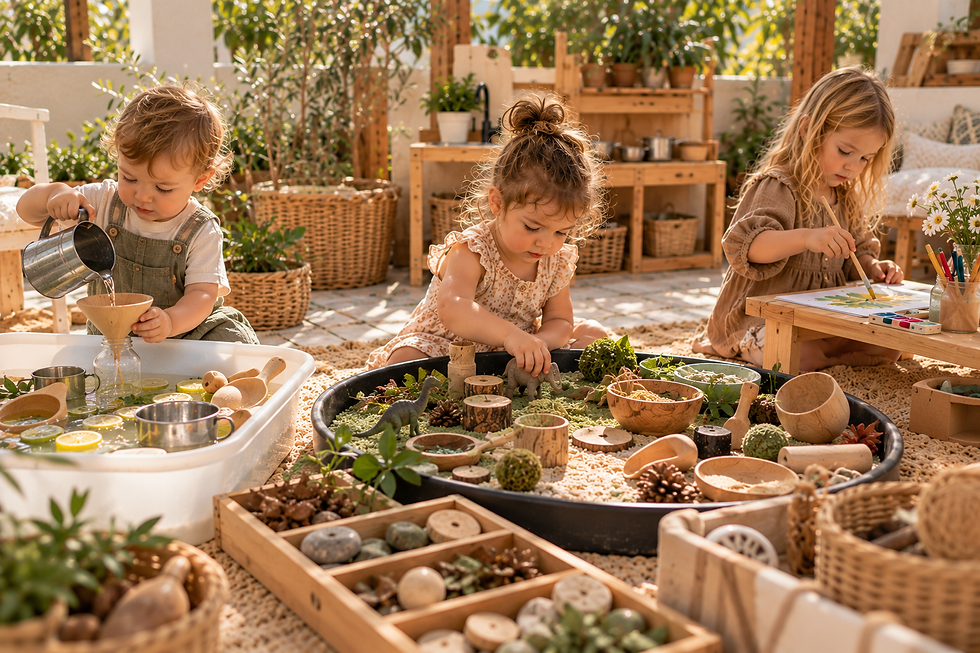
Try a water pouring station
Water play is often the easiest win. Place a towel on the floor or use a balcony, bathroom, or outdoor space. Add a shallow tub with a little water, then offer:
Two small cups
A ladle
A funnel
A sponge
A few floating lids
Use just enough water for pouring. Stay close the whole time.
Toddlers practise hand-eye coordination, grip strength, patience, and problem-solving. They also learn early maths ideas, such as full, empty, more, less, heavy, and light.
For a calmer version, offer dry pouring with large pulses such as rajma or chana for older toddlers who no longer mouth objects. For younger toddlers, use large pom-poms or fabric balls instead.
Make a posting box
Cut a slot in the lid of a cardboard box. Offer large bottle caps, thick cardboard circles, or wooden tokens. The toddler posts each item through the slot, opens the box, empties it, and begins again. This activity looks simple, but toddlers often stay with it for a long time. It supports fine motor control and object permanence. It also gives them the joy of completing a task. To change the challenge, make the slot wider, narrower, vertical, or horizontal.
Build a loose parts road
Place a few toy vehicles on a mat with cardboard tubes, blocks, fabric strips, and flat stones that are too large to swallow. Do not build the road for the child. Arrange the materials so they suggest movement.
Some toddlers will line up the cars. Some will load the blocks. Some may ignore the vehicles and stack the tubes. That is still meaningful play.
You can join by narrating:
“The car is going under the tunnel.”
“You made a long line.”
“That block fell. You are trying again.
Avoid asking too many questions. Toddlers often think with their hands before they can explain with words.
Set up a practical life tray
Toddlers enjoy real tasks when the tools fit their hands. Try a tray with:
A small cloth for wiping
A child-safe brush and dustpan
A bowl of large peels or leaves to transfer
A sponge to squeeze
A small towel to fold
These tasks build concentration and confidence. They also help toddlers feel included in daily life.
The best invitations to play for preschoolers encourage stories and problem-solving
Preschoolers can hold ideas in their minds for longer. They enjoy pretend play, early building challenges, sorting, patterns, and storytelling. They still need open-ended materials, but they can handle more layered setups.
Best age range for these ideas: around 3 to 6 years.
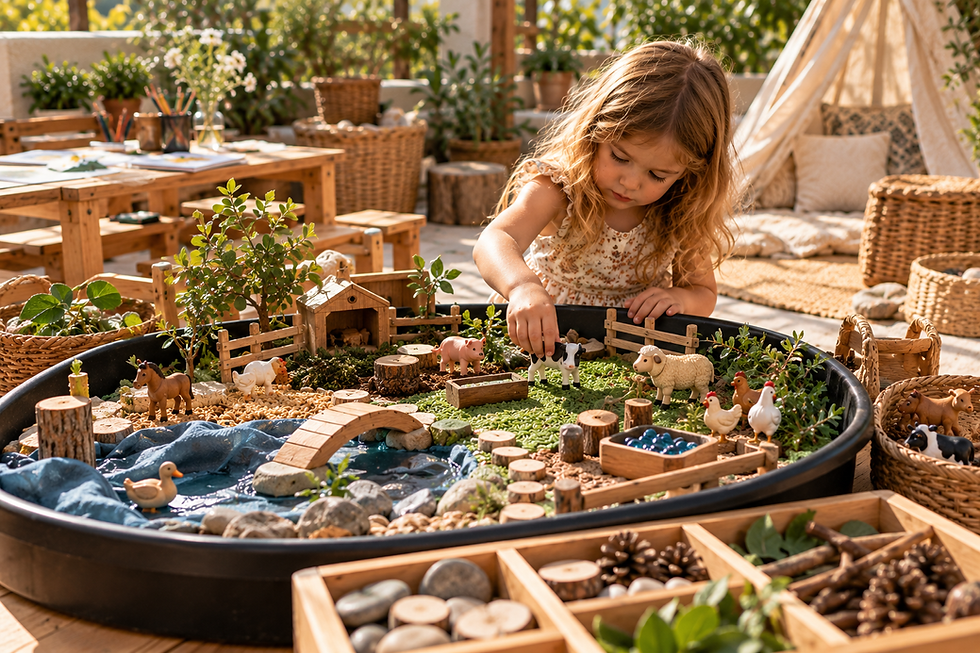
Create a small world scene
A small world setup lets a child act out stories with miniature pieces. Start with a tray or mat. Add a few related materials.
For a farm scene, use:
Toy animals
Green fabric or paper
Sticks or blocks for fences
Cotton for clouds
Small bowls for water troughs
For a construction scene, use:
Toy trucks
Blocks
Pebbles
Cardboard tubes
A spoon for scooping
For an Indian market scene, use:
Small baskets
Toy fruits and vegetables
Bottle caps as coins
Fabric pieces as shop mats
Paper bags
Let the child decide the plot. If they ask you to join, take a small role. You might be the customer, the farmer, or the person driving a truck. Follow their rules as much as you can.
Offer a build and test challenge
Preschoolers love a challenge when it feels playful. Keep it open-ended. Instead of saying, “Make a bridge exactly like this,” say, “Can you make something that helps the toy animal cross the river?”
Materials can include:
Blocks
Cardboard strips
Empty tissue rolls
Tape
A blue scarf for the river
Small animal figures
This encourages planning, testing, and trying again. If the bridge falls, pause before helping. Many children need that moment to think.
You can say, “What could make it stronger?” or “Which block do you want to try next?”
Make a mark-making invitation
Writing begins long before worksheets. Preschoolers need chances to draw, scribble, trace, stamp, and create symbols.
Set out:
Paper in different sizes
Crayons or thick colour pencils
Clipboards
Envelopes
Old greeting cards
Stickers
A pretend post box
A child may draw a map, write a shopping list, send a letter, or cover the page in spirals. All of it supports early literacy.
For a less messy option, use a tray of rava or rice flour for finger tracing. Keep it dry and supervise closely.
Invite sorting and pattern play
Place buttons, shells, large beads, leaves, or blocks in a bowl. Add smaller bowls or a muffin tray. Let the child sort however they like.
They may sort by colour, size, shape, texture, or a rule only they understand. Ask them to tell you about their choices if they seem open to talking.
Pattern play can be just as simple. Start a row with red block, blue block, red block, blue block. Then stop. Some children will continue the pattern. Others will build a tower. Both responses are fine.
A quick age-by-age guide to invitations to play
Use this as a starting point, not a strict rule. Children develop at different speeds, and interests change from week to week.
Age group | Best materials | Play focus | Adult role |
Babies | Scarves, rattles, textured balls, large rings, soft cloths | Senses, grasping, sound, connection | Stay close, simplify, name what happens |
Toddlers | Cups, funnels, boxes, blocks, vehicles, sponges | Pouring, posting, carrying, stacking, repeating | Supervise, allow mess, avoid taking over |
Preschoolers | Loose parts, small world toys, art materials, blocks, pretend props | Stories, sorting, building, early writing | Ask fewer questions, follow the child’s ideas |
How to set up an invitation to play in five minutes
You do not need to plan all day. A quick setup often works better because it feels relaxed.
Follow this rhythm:
Choose one main action
Pouring, stacking, sorting, posting, drawing, washing, or pretending.
Pick a contained space
Use a tray, basket, mat, towel, or low table.
Limit the materials
Start with fewer items than you think you need. You can add more later.
Check safety
Look for choking hazards, sharp corners, loose parts, slippery floors, and materials that can stain.
Step back
Watch what the child does before adding your own ideas.
If play ends quickly, that does not mean the setup failed. Young children often explore in short bursts. You can leave the materials out for a while, if safe, or try again later.
The best materials are often already at home
Some of the most useful play materials are not toys. They are everyday objects that children can use in many ways.
Keep a small “play shelf” or basket with items such as:
Cardboard tubes
Fabric scraps
Large lids
Wooden spoons
Steel bowls
Sponges
Pegs for older preschoolers
Empty boxes
Large shells or stones
Paper bags
Measuring cups
Rotate materials every few days. This keeps play fresh without buying more things. If a child keeps returning to one object, leave it available. Repetition is a sign of learning, not boredom.
Let the child lead, even when play looks different than expected
The real value of an invitation to play appears when adults resist the urge to correct every choice. A toddler may use a brush as a drumstick. A preschooler may turn a sorting tray into a birthday party. A baby may prefer the basket over the objects inside it.
That is not wasted play. That is exploration.
Set up the space with care, keep it safe, and then watch. Notice what the child repeats. Notice what makes them smile, pause, or try again. Those small clues will tell you what to offer next.
The best invitation to play is the one that meets the child in front of you, at their age, stage, and mood that day. Start simple, use what you have, and let play unfold.

Comments